






















Low-temperature Lithium Batteries Classifications
Low-temperature lithium-ion batteries mainly include low-temperature lithium-ion polymer (LiPo) batteries, low-temperature 18650 batteries, and low-temperature lithium iron phosphate (LiPO4) batteries. We will explore the advantages and disadvantages of each one.
Low-temperature lithium polymer batteries
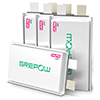
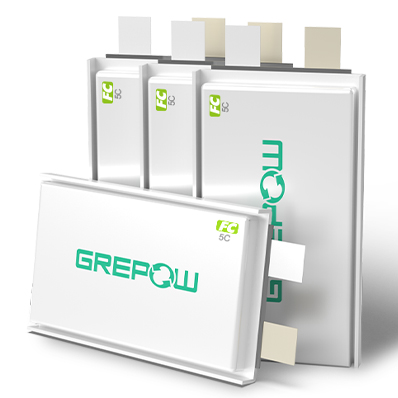
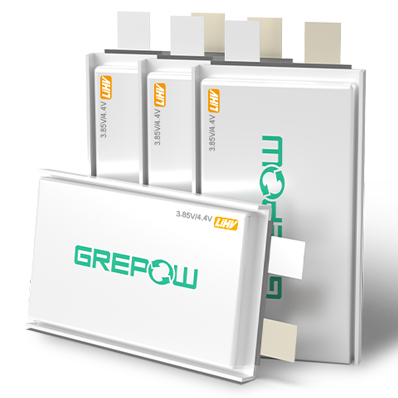
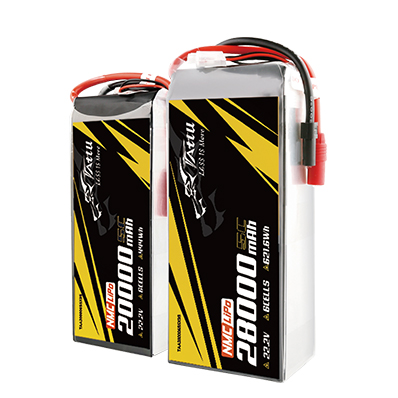
Low-temperature LiPo batteries have the best low-temperature performance especially in smart wearable devices, where the advantages are more prominent.
Performance characteristics
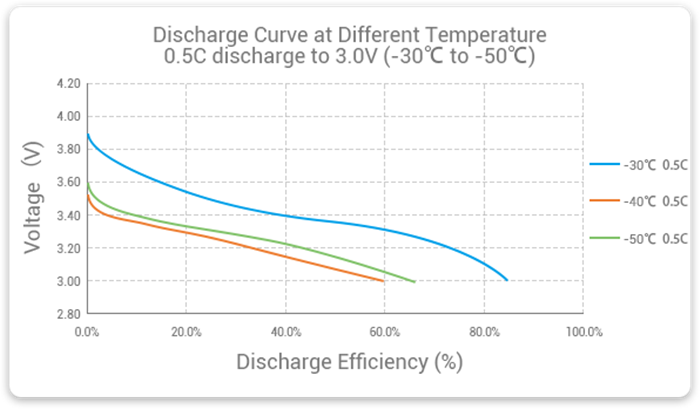
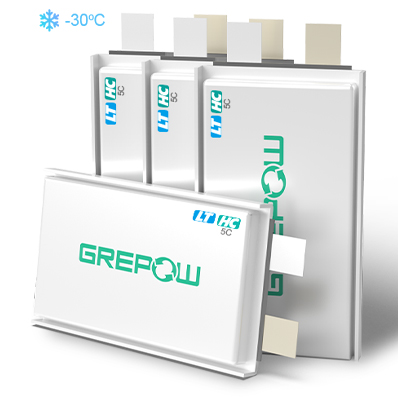
Grepow's LiPo batteries can be made to operate in environments with low-temperatures of -50℃ to 50℃. Under low-temperatures, the batteries can achieve a lower internal resistance and, thus, a high discharge rate. Compared with traditional lithium polymer batteries, Grepow's batteries have broken through the discharge temperature limits of -20℃ to 60℃. They are able to discharge over 60% efficiency at 0.2C at -40℃ and discharge over 80% efficiency at 0.2C at -30℃. When charged at 20℃ to 30℃ by 0.2C, the capacity can maintain above 85% after 300 cycles. The batteries can be ready for mass production, and they have been widely used in cold climates and special products.
Shape advantage
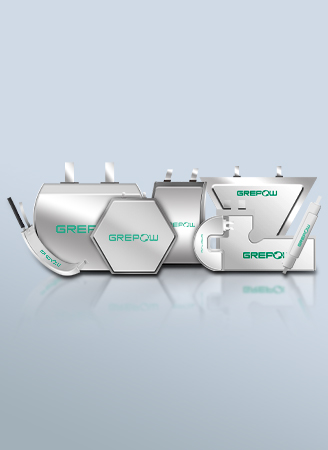
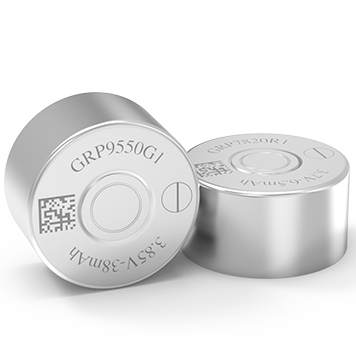
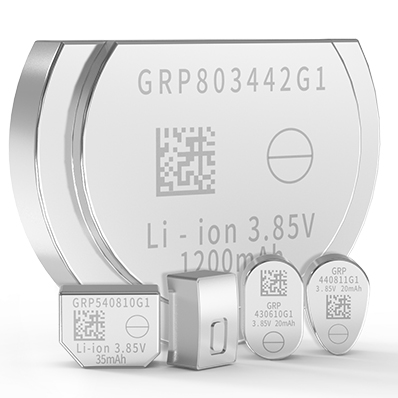
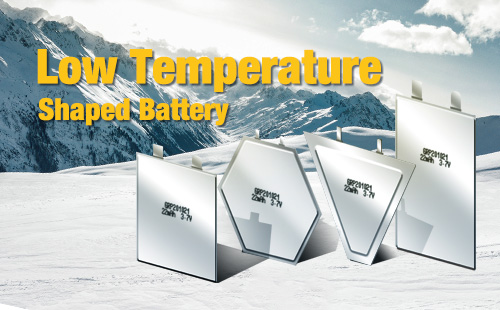
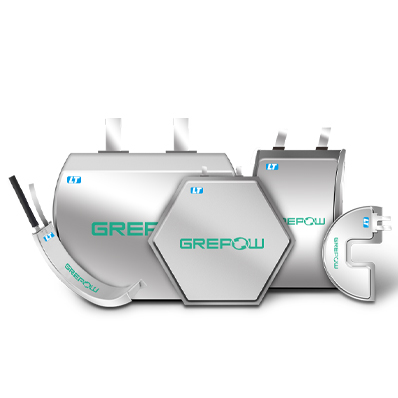
With stacking technology, battery shapes can be widely customized, which allows for more flexibility and space within products. We can also create small and ultra-thin batteries with low-temperature characteristics used in special fields or professional smart equipment.
Weight advantage
Under the same voltage and capacity conditions, low-temperature lithium-ion polymer batteries and low-temperature lithium iron phosphate batteries are lighter than low-temperature 18650 batteries. However, LiPo batteries are the most expensive in terms of production and manufacturing costs, which is one of the important factors limiting its use in some application areas.
Low-temperature 18650 lithium-ion batteries
Low-temperature 18650 lithium-ion batteries mainly consist of liquid electrolytes. these cylindrical batteries with steel shells have fixed dimensions, which means that their shape and size are fixed as well. The largest capacity is currently 3300mAh, which can only be achieved by a limited number of manufacturers.
Characteristics
At temperatures between -40℃ to 60℃, the effective discharge capacity is 40% to 55%, and the effective cycle life is more than 180 cycles.
At temperatures between -30℃ to 65℃ at 0.2C discharge, the effective discharge capacity is above 65%.
At 1C rate discharge, the discharge capacity is above 60%, and the cycle life comes out to more than 200 cycles.
At temperatures between -20℃ to 75℃, the effective discharge capacity is more than 80%, and the cycle life is more than 300 cycles.
Due to the fixed performance and size of the battery, there is limited use for this battery, but its production and manufacturing costs are relatively low.
Low-temperature lithium iron phosphate batteries
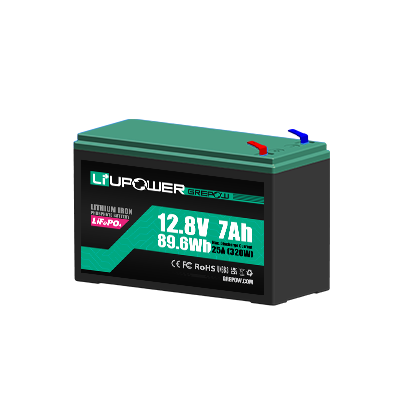
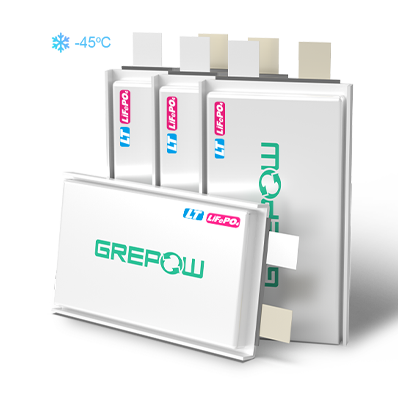
Low-temperature LiPO4 batteries have two kinds of packaging cases: one is a steel case, which is currently mostly used in new energy batteries, such as energy-storage batteries and new energy vehicle batteries; the other is a soft-pack LiPO4 battery with aluminum plastic film for the outer packaging. The performance of this battery is basically the same as that of the LiPo battery. However, the low-temperature performance of LiPo batteries is better than that of 18650 batteries. The development of LiPO4-battery technology has not been long, and the requirements for production equipment are relatively high. If you are interested in our products, you can directly contact us at info@grepow.com Grepow Website: https://www.grepow.com/


Related Articles
-
Powering Aerial Artistry: Grepow Battery Solutions Behind Drone Light Shows
2025-10-27 -
Powering the Future of Wearables: How Grepow's Patented Curved Battery is Revolutionizing the Smart Ring
2025-10-16 -
Grepow Battery Announces Manufacturing Agreement with Powerbanc Group
2025-09-30
Related products
-
-30℃ 5C Low-Temperature High Discharge Battery
-
Low Temperature Shaped Battery
-
-40℃ Low Temperature LiFePO4 Battery
Comment(0)
Comment( Your email address will not be disclosed. Required fields are marked as * )