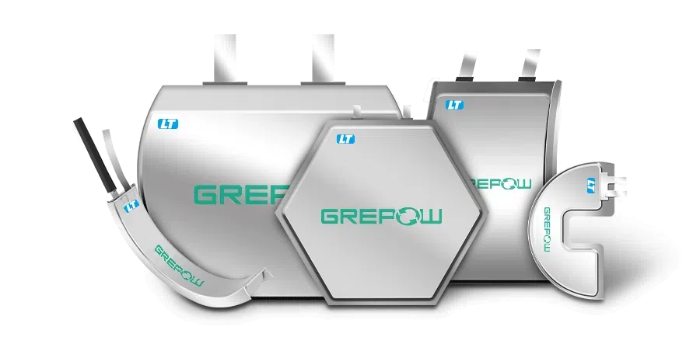
AI glasses are evolving from simple Bluetooth accessories into always-available wearable devices for AI interaction, hands-free imaging, real-time translation, navigation, fitness data, vision correction, and outdoor sports. As more electronics move into the frame, the battery must deliver longer runtime and stable power without making the glasses bulky, unbalanced, or uncomfortable. Grepow develops custom rechargeable lithium battery solutions for everyday smart glasses, prescription smart glasses, cycling glasses, ski goggles, swimming goggles, and other smart eyewear. Available solutions include ultra-narrow pouch cells for slim temples, low-temperature shaped batteries for cold outdoor environments, and shaped metal-casing cells for compact, space-constrained structures.
The smart eyewear market is no longer defined by one standard product. Some devices are designed to look and feel like conventional glasses, while others use larger sports-goggle structures to accommodate displays, sensors, and environmental protection. Each form creates a different power profile and a different mechanical space for the battery.
Today's AI smart glasses combine open-ear audio, microphones, Bluetooth, cameras, voice assistants, translation, and wireless connectivity in a familiar frame. Their batteries must fit inside narrow temples while supporting short power peaks when the camera, processor, storage, and wireless modules operate together.
Prescription smart glasses must accommodate different lens powers, frame sizes, hinge structures, and facial-fit requirements. Because users may wear them throughout the day, low weight, balanced left-to-right distribution, slim temples, low heat generation, and reliable cycle life are especially important.

Sports glasses can display speed, heart rate, navigation, power, cadence, or training data while maintaining wireless connections to watches, bike computers, sensors, and smartphones. The battery must remain lightweight and secure while tolerating sweat, vibration, repeated movement, changing weather, and extended outdoor operation.
Smart ski goggles and emerging AI ski goggles may combine a heads-up display, navigation, group communication, cameras, sensors, or anti-fog functions. The same power challenges apply to connected snow goggles and snowboard goggles designed for long sessions on the mountain. Cold temperatures can increase battery resistance, reduce available capacity, and cause earlier voltage cutoff. These products require a battery developed and validated for low-temperature discharge rather than a standard room-temperature cell.
Smart swimming goggles can provide lap data, heart-rate information, stroke metrics, navigation, or real-time visual feedback. Compared with standard swim goggles, the enclosure must accommodate electronics and a rechargeable battery while remaining compact, balanced, and isolated from water. Products designed as prescription swimming goggles or prescription water goggles introduce additional space and fit constraints around corrective lenses. Cell shape, mechanical protection, pack sealing, terminal design, and charging-contact layout must therefore be considered together.
There is no single battery format that works equally well for every type of smart eyewear. Battery selection should begin with the product's structure, workload, environment, and charging experience.
| Smart Eyewear Type | Typical Electronic Loads | Main Design Constraints | Battery Priorities |
|---|---|---|---|
| Everyday AI glasses and Bluetooth glasses | Audio, microphones, camera, AI processor, Bluetooth, Wi-Fi | Narrow temples, low weight, natural appearance | Ultra-narrow dimensions, high energy density, pulse-power stability, fast charging |
| Prescription smart glasses | Audio, camera, AI, sensors | Variable frame geometry, all-day comfort, weight balance | Custom dimensions, split-cell options, low heat generation, long cycle life |
| Cycling and running glasses | Display, GPS-linked data, Bluetooth, sensors, audio | Sweat, vibration, movement, changing weather | Lightweight design, secure integration, long runtime, environmental durability |
| Ski, snow, and snowboard goggles | Display, camera, communication, navigation, anti-fog functions | Subzero temperature, gloves-on use, long outdoor sessions | Low-temperature discharge, voltage stability, safe charging control |
| Smart swim goggles | Display, sensors, data logging, wireless synchronization | Water isolation, limited side volume, pressure and impact | Shaped cell, rigid protection where needed, sealed pack integration |
The temples of smart glasses are shared by batteries, speakers, antennas, printed circuit boards, hinges, touch controls, wires, and structural supports. A battery that looks small on a specification sheet may still waste valuable space if its geometry does not match the frame. Ultra-narrow and custom-shaped cells can use available length and irregular cavities more efficiently.
Smart glasses do not draw power at a constant rate. Standby, wake-word detection, and Bluetooth may create a relatively light load, while recording, image processing, AI interaction, display activation, or wireless media transfer can activate several components at once. For a very small cell, even a modest current pulse can represent a demanding C-rate and cause voltage sag if the cell is not designed for the workload.
Increasing capacity can extend runtime, but it can also make the temples thicker and heavier. Poor weight distribution may create pressure around the ears or cause the frame to slip during movement. The practical goal is not simply the highest possible mAh value. It is the highest usable energy that fits the frame while preserving balance, thermal comfort, and appearance.
Ski goggles, cycling glasses, and swimming goggles operate far beyond controlled indoor conditions. Cold weather can reduce discharge capability, while sweat, rain, condensation, and water exposure affect the pack, terminals, charging contacts, and enclosure. The cell chemistry, protection circuit, mechanical housing, and sealing strategy should be validated as one system.
Smart eyewear is often recharged during short breaks or through a portable charging case. Fast charging can improve daily usability, but the charge rate must be matched to the cell, temperature, enclosure, and cycle-life target. Charging time should be evaluated together with temperature rise, capacity retention, and the amount of runtime recovered during a short top-up.
Grepow offers three main battery directions for different smart eyewear architectures. The final cell should be selected according to measured current, available space, operating temperature, charging method, protection requirements, and expected product life.
| Application | Recommended Battery Direction | Additional Design Focus |
|---|---|---|
| AI glasses or Bluetooth glasses | Ultra-narrow pouch LiPo | Pulse-power stability, fast charging, slim temples |
| Prescription smart glasses | Ultra-narrow custom pouch LiPo | Frame-size flexibility, balanced weight, low heat |
| Cycling and running glasses | Ultra-narrow LiPo or compact metal-casing cell | Sweat isolation, vibration, secure fit, long runtime |
| Smart ski, snow, and snowboard goggles | Low-temperature shaped LiPo | Subzero discharge, charging control, insulation |
| Smart swimming goggles | Shaped metal-casing cell or custom pouch cell | Sealed pack integration, terminal isolation, balance |
The table provides a starting point, not a final specification. A suitable battery can only be confirmed after reviewing the frame drawing, power profile, environmental limits, charging system, and certification requirements.
A smart-glasses battery should be developed as part of the complete wearable system. Grepow can support customers from early concept evaluation through sample verification and mass production.
The best smart-glasses battery is not simply the smallest cell or the model with the highest capacity. It is the solution that uses the available space efficiently, supports the real workload, performs reliably in the intended environment, and keeps the finished eyewear comfortable to wear.
Send Grepow your frame drawing, available battery dimensions, target runtime, peak and average current, charging requirements, operating temperature, and annual volume. Our engineering team can help identify a suitable existing cell or develop a custom battery solution for your smart eyewear project.
Contact Grepow for smart glasses battery samples and custom development.
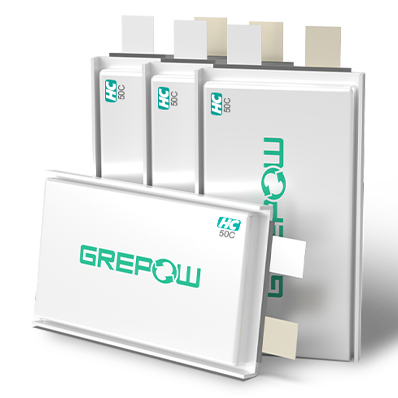
Pouch Ultra-Narrow Lipo Battery
Low-Temperature Battery for Ski Goggles
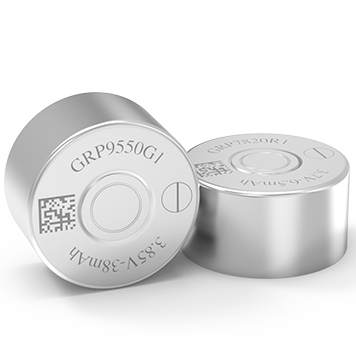
Shaped Metal Casing Lipo Battery Cell
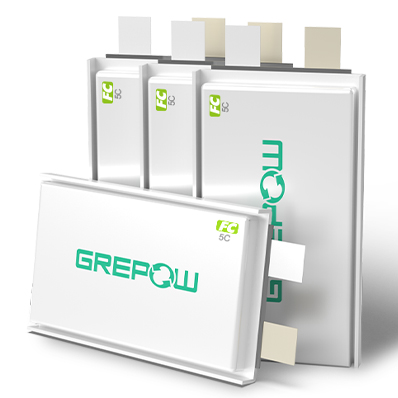
Grepow has over 20 years of experience in battery development and manufacturing, specializing in advanced novel LiPo batteries for modern wearable electronics. The custom-shaped Lithium-Ion pouch batteries, available in ultra-thin designs as narrow as 4.1mm, are tailored to fit a wide range of device shapes, including curved, round, and L-shaped forms. These batteries deliver excellent performance with a cycle life exceeding 1000 cycles, operate in temperatures from -50°C to 50°C, and support fast charging up to 5C. Grepow's innovative solutions offer high energy density and efficient spatial utilization, making them ideal for cutting-edge wearable tech.
The ultra narrow lipos are rectangular ones with a width from 4.1mm to 11mm which fit into the eyeglass frames offering stable output power, lightweight to a comforttable wear. Available in full-charged voltages from 4.2V to 4.45V.
Model No. | Full Charged | C rate | Capacity | Thickness | Width | Length | Shape |
GRP220550 | 4.35V | 2C | 47mAh | 2.38mm | 5.6mm | 50mm | Ultra Narrow |
GRP220535 | 4.35V | 2C | 31mAh | 2.38mm | 5.6mm | 35mm | Ultra Narrow |


GRP210436 | 4.35V | 1C | 19.2mAh | 2.16mm | 4mm | 36.5mm | Ultra Narrow |
*Contact us for more Ultra narrow Li-ion batteries or customize your special battery!

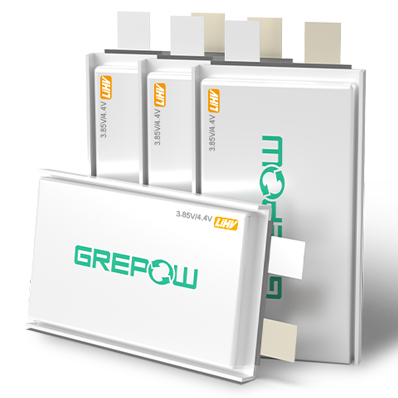
Standard lithium batteries may lose usable capacity and voltage stability as temperature falls. Grepow low-temperature LiPo batteries use specialized formulations and cell designs to support more dependable discharge in cold environments. They can also be developed in custom pouch shapes to fit the side housing, strap module, or internal cavity of ski goggles and outdoor smart eyewear.
Specify low-temperature performance separately for discharge, charging, and storage. Selected Grepow configurations can support discharge in environments down to -40℃ or -50℃. Actual capacity retention, allowable current, charging temperature, and cycle life depend on the selected cell and must be confirmed through project-specific testing.
● More stable discharge and reduced early cutoff in subzero conditions
● Custom shapes and dimensions for goggles and outdoor eyewear
● Temperature range selectable according to the real operating environment
● Low-temperature charging strategies available for selected designs
The following compact models are suitable starting points for ski goggles and outdoor smart eyewear with a side housing, rear housing, or strap-mounted battery module. They are generally too large for a conventional slim glasses temple, so final selection should be based on the actual enclosure drawing and weight-distribution plan.
| Model No. | Capacity | Nominal Voltage | Continuous Discharge | Size (H x W x L) | Weight | Discharge Temperature Range |
|---|---|---|---|---|---|---|
| GRP5346052 | 1,400 mAh | 3.7 V | 1.4 A | 5.3 x 47 x 52.5 mm | 24.0 ± 1.5 g | -40℃ to 60℃ |
| GRP7522090 | 1,800 mAh | 3.7 V | 1.8 A | 7.5 x 22.5 x 90.5 mm | 30.0 ± 2.0 g | -40℃ to 60℃ |
| GRP7039058 | 1,950 mAh | 3.7 V | 1.95 A | 7.0 x 39.5 x 59 mm | 32.0 ± 1.5 g | -40℃ to 60℃ |
| GRP5246052 | 1,400 mAh | 3.7 V | 1.4 A | 5.3 x 47 x 52.5 mm | 24.5 ± 1.5 g | -50℃ to 50℃ |
| GRP9834050 | 1,900 mAh | 3.7 V | 1.9 A | 9.8 x 34 x 51 mm | 31.5 ± 1.5 g | -50℃ to 50℃ |
| GRPA439044 | 2,000 mAh | 3.7 V | 2.0 A | 10.4 x 39.4 x 45.5 mm | 34.0 ± 1.5 g | -50℃ to 50℃ |
The temperature values in the table refer to the discharge range of the corresponding low-temperature series. Charging temperature and allowable charging current must be confirmed separately for the selected model.
Charging a lithium battery below 0℃ requires a cell and charging strategy specifically designed and validated for that condition. Low-temperature discharge capability alone does not mean that unrestricted cold charging is permitted.
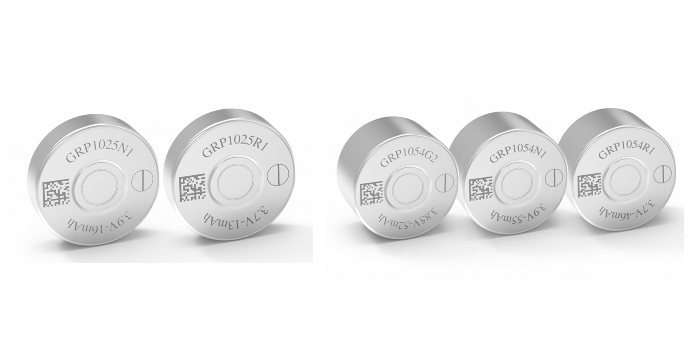
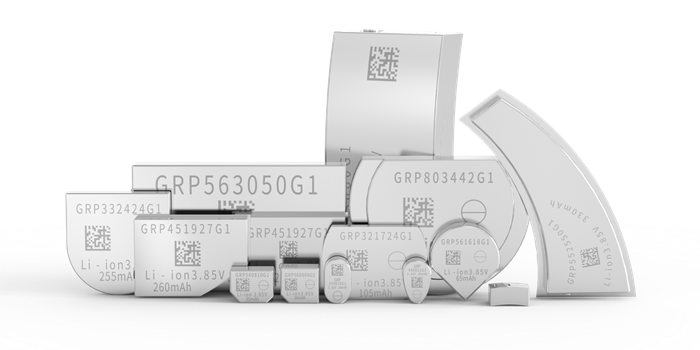
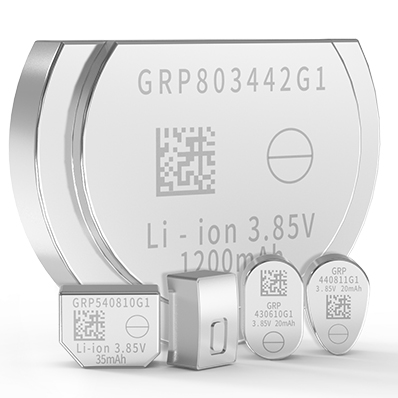
Grepow shaped metal-casing lithium-ion cells use a rigid stainless-steel enclosure and a stacked internal structure. Compared with a conventional pouch cell, the rigid casing can provide stronger dimensional control and reduce the extra clearance normally reserved for pouch-cell expansion. Custom D-shaped, C-shaped, fan-shaped, crescent, pentagonal, stepped, and other geometries can use irregular internal space more effectively.
These cells are suitable for smart swimming goggles, sports goggles, display modules, charging cases, and eyewear designs with compact side housings or non-rectangular cavities. They can also support compact electronics modules used in prescription swimming goggles when the available space does not match a standard rectangular cell. The metal casing protects the cell mechanically, but it does not make the finished product waterproof. Water resistance must be achieved through pack-level and device-level sealing.
● Rigid metal enclosure for dimensional stability and mechanical protection
● Custom shapes for non-rectangular internal cavities
● Stacked structure for efficient space utilization and low internal resistance
● Reduced need for expansion clearance compared with conventional pouch designs
● Custom tabs, wires, connectors, protection circuits, and pack structures

PN. | Nominal Voltage | C rate | Capacity | Weight | Size (H*W*L) |
3.85V | 1C | 65mAh | 1.55g | 5.6*16*18mm | |
3.85V | 1C | 105mAh | 3.3g | 3.2*17*24mm | |
3.85V | 1C | 255mAh | 6.5g | 3.3*24*24mm | |
3.85V | 1C | 260mAh | 6.25g | 4.5*19*27mm | |
3.85V | 1C | 320mAh | 7.65g | 4.5*19*27mm | |
3.85V | 1C | 330mAh | 7.85g | 5.5*25*50mm | |
3.85V | 1C | 1200mAh | 20.3g | 8*34*42mm | |
3.85V | 1C | 1200mAh | 19.5g | 5.6*30*50mm | |
3.85V | 1C | 2300mAh | 52.6g | 9.9*30*60mm |