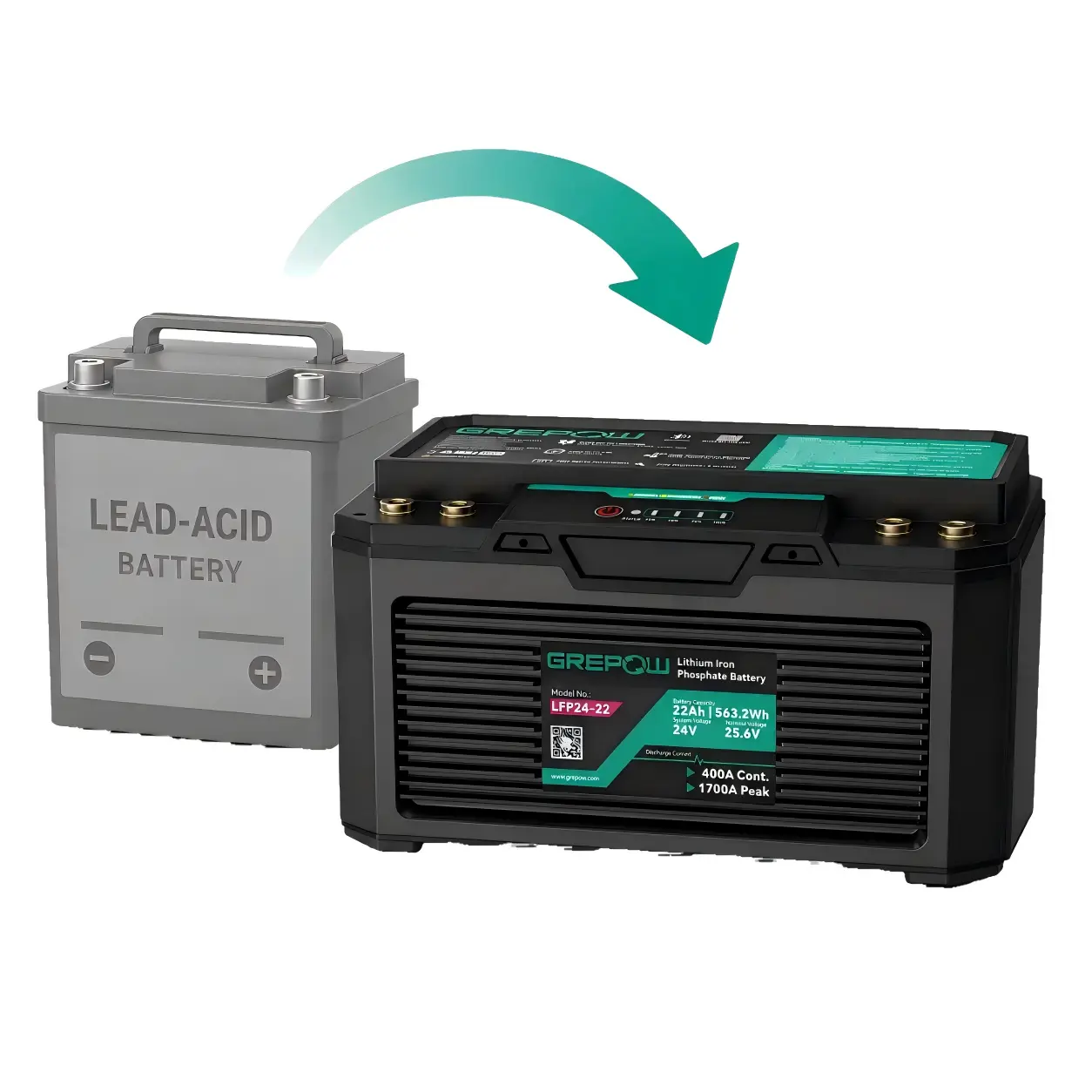
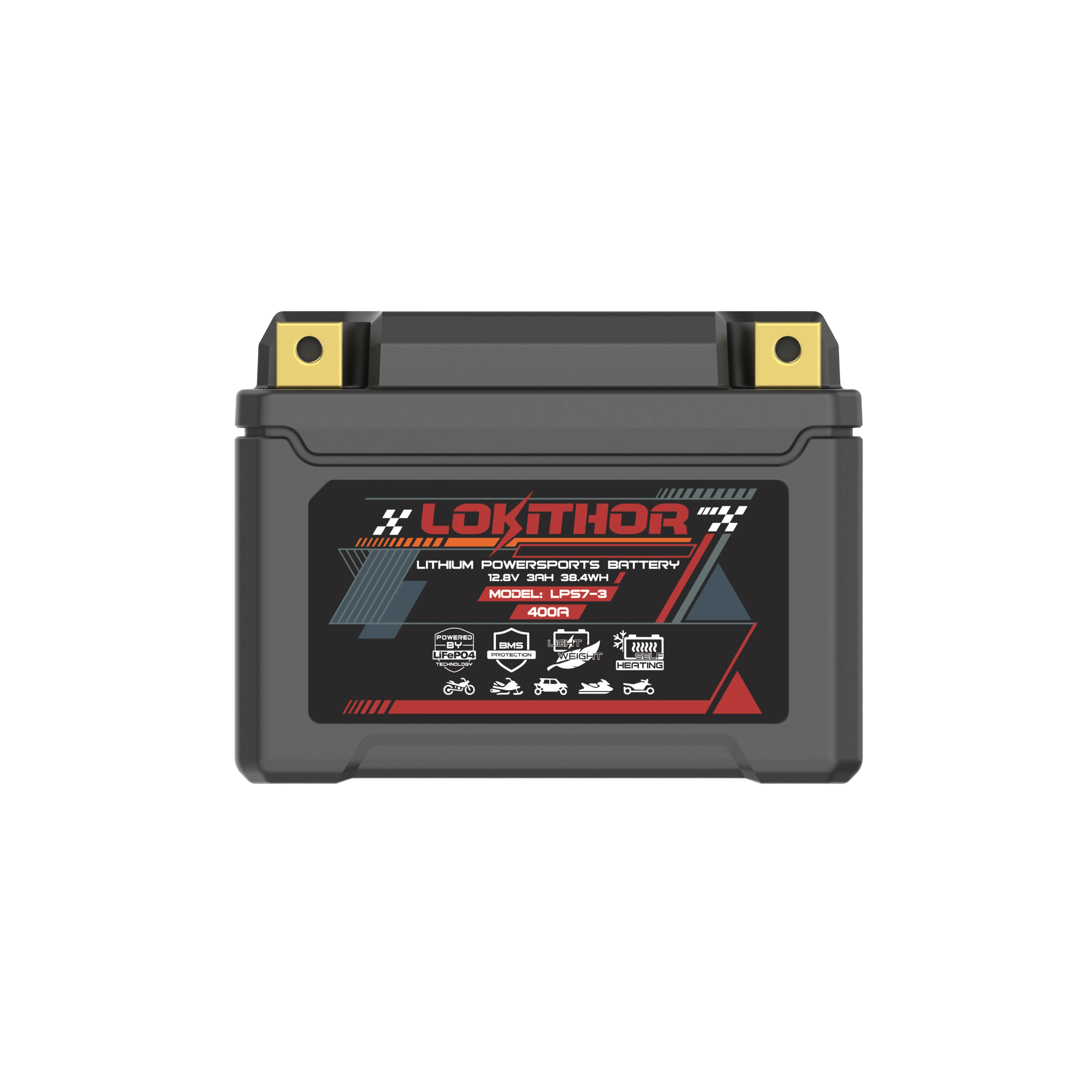
Security and alarm systems have traditionally relied on sealed lead-acid batteries to provide backup power during mains power outages. However, lead-acid batteries not only add weight and have lower usable capacity under high-load conditions, but they may also require periodic replacement. Lithium iron phosphate (LiFePO₄) batteries offer a viable alternative; their longer service life, stable voltage output, lighter weight, and integrated battery protection features reduce maintenance requirements and enhance the reliability of backup power. Grepow has developed lithium iron phosphate batteries to replace compatible lead-acid batteries in security applications. Available solutions include a compact 12.8V 7Ah replacement model, as well as high-capacity 12.8V and 25.6V batteries.
Security equipment does not have one universal battery requirement. Alarm panels have low standby loads, solar surveillance may cycle daily, and powered gates or road blockers can create demanding startup loads. The battery must match the load profile, not only voltage and amp-hour capacity.
Grepow provides 12.8V and 25.6V LiFePO4 lead-acid replacement batteries for compatible security, alarm and powered access systems. Options range from 12V 7Ah backup to high-discharge batteries for motor, pump or inverter loads. Charger, supervision, space and approval must be checked.
Start with how the system uses power. This separates applications that mainly need standby energy from those that benefit from frequent-cycle performance or high-discharge capability.
| Load Profile | Typical Equipment | Electrical Behavior | Main Battery Priorities | Grepow Solution Direction |
|---|---|---|---|---|
| Standby backup | Alarm panels, communicators, access controllers and small security cabinets | Low continuous load with brief siren, communication or lock events | Enclosure fit, backup time, charger compatibility and low-battery warning | LFP12-7 or a custom compact 12V battery |
| Continuous network backup | Cameras, NVRs, routers, wireless bridges and PoE-related equipment | Sustained load determined by the complete security network | Usable energy, stable output and required recording time | Select by total wattage and runtime; existing or custom solution after system review |
| Frequent cycling | Solar CCTV, mobile surveillance towers and remote monitoring stations | Daily or frequent charge and discharge with variable energy input | Cycle performance, charging control, temperature management and remote monitoring | LFP12-45, LFP24-22 or a custom battery sized from the daily energy balance |
| Powered or mechanical operation | Gates, parking barriers, shutters, turnstiles, bollards and road blockers | Motor, actuator, solenoid or hydraulic-pump startup with intermittent peaks | Peak current, voltage stability, peak duration and required operating cycles | LFP12-45 or LFP24-22 where the measured load justifies high-discharge capability |
| Central high-power backup | DC UPS, centralized security power and inverter-backed equipment | Continuous system load combined with possible startup or inverter surge | Runtime, surge response, communication and coordinated protection | LFP12-45, LFP24-22 or a custom higher-voltage solution |
A larger system does not automatically need high discharge. Cameras and controllers create sustained energy demand; motors, pumps and inverters are more likely to require peak-current performance.
The following application groups show where compact backup batteries, frequent-cycle designs and high-discharge LiFePO4 batteries provide different forms of value.
Intrusion systems combine a control panel, sensors, communication and warning devices. Their battery demand normally comes from long standby operation rather than high current. For compatible 12V equipment, the LFP12-7 provides a compact 7Ah option with PCM protection. Confirm the enclosure, terminals, charger, battery-test logic and required standby time.

Door controllers, readers, biometric terminals, magnetic locks and electric strikes need reliable DC backup but usually not hundreds of amps. Size the battery from controller load, lock behavior, door count and emergency runtime. Evaluate these electronic loads separately from gates and barriers that use motors or larger actuators.

Video surveillance backup may support cameras, infrared lighting, an NVR, routers, network switches and edge equipment. Select capacity from the measured power of the complete system and required recording time, not camera count alone. System voltage and energy normally matter more than extreme discharge current unless an inverter or another surge load is connected.
Mobile surveillance towers and solar security stations may combine cameras, radar, lighting, speakers and wireless communication. Daily cycling makes energy balance, solar input, seasonal conditions, charging limits and days of autonomy important. LiFePO4 can be practical where frequent cycling, lower weight and integrated monitoring are valuable.

Automatic gates and barrier arms combine control electronics with a motor that draws more current during startup, movement or reversal. The battery must maintain voltage and support the required outage cycles. LFP12-45 and LFP24-22 are candidate directions for verified 12V and 24V systems with demanding peaks; lower-power operators may need a smaller custom battery.
Powered perimeter equipment may use a DC motor, hydraulic pump, solenoid valve and emergency controls. These components can create short peaks above the standby load. High-discharge capability can limit voltage drop, but current, peak duration, duty cycle and emergency movement sequence must be measured for the specific system.
Motorized doors, shutters and turnstiles may need to complete an opening, closing or release sequence after mains failure. Battery requirements depend on motor startup, brake or lock release, controller load and the number of movements. High-discharge LiFePO4 can add power margin when testing confirms these peaks.

Centralized backup can combine surveillance, access control, communication and network equipment. An inverter adds conversion loss, continuous DC current and startup surge. LFP12-45 and LFP24-22 provide high-current capability and smart monitoring for suitable systems; larger installations may require custom voltage, capacity and communication.
The LFP12-7 is the primary option for compact standby applications. LFP12-45 and LFP24-22 address verified requirements for higher energy, high-current output, smart monitoring or powered operation.
| Model | Discharge Capability | Primary Application Direction | Main Selection Reason |
|---|---|---|---|
| LFP12-7 | Up to 45A recommended continuous discharge* | Compatible alarm panels, communicators, compact access-control cabinets and small local backup systems | Common 12V 7Ah capacity class, compact enclosure and integrated PCM protection |
| LFP12-45 | 500A continuous Up to 1800A peak | Verified 12V-powered access equipment, DC UPS, inverter-backed security and higher-energy remote systems | High-current output, 576Wh energy, BMS protection, Bluetooth monitoring and LED indicators |
| LFP24-22 | 400A continuous Up to 1700A peak | Verified 24V gates, barriers, road blockers, powered doors and central backup with surge loads | Native 25.6V platform, high-current output, BMS protection, Bluetooth monitoring and LED indicators |
*The LFP12-7 supports up to 45A recommended continuous discharge from 10°C to 60°C and 25A from -20°C to 10°C. See the product specification for complete limits.
These are starting points. Final selection depends on the existing battery, charger, current profile, backup time, space and approvals.
Where system design and approval allow a chemistry change, LiFePO4 can address several SLA limitations.
| SLA Limitation | LiFePO4 Design Advantage | Practical Value for Security Equipment |
|---|---|---|
| Higher weight for comparable nominal capacity | Lower battery weight | Easier handling in wall-mounted cabinets, mobile towers and distributed sites |
| Voltage declines progressively during discharge | Relatively stable discharge voltage | Helps compatible controllers, communication devices and mechanical loads remain within their operating-voltage range |
| Repeated deep cycling can accelerate capacity loss | Better suited to frequent cycling when correctly charged | Supports solar, mobile and frequently interrupted installations with an appropriate energy design |
| Basic batteries provide limited protection or operating data | Integrated PCM or BMS protection, with smart monitoring on selected models | Adds protection against abnormal voltage, current and temperature; LFP12-45 and LFP24-22 also support Bluetooth status checks |
Similar nominal voltage and capacity do not guarantee compatibility. A professional lead-acid replacement project should verify the battery and the complete power system together.
Existing battery model, dimensions, terminals, wiring and mounting method
Charger voltage, float or standby behavior, charging current and temperature compensation
Continuous load, peak current, peak duration, backup hours and required operating cycles
Low-battery warning, battery-presence test and recovery behavior after BMS protection
Minimum equipment voltage, BMS cutoff threshold, cable loss and acceptable voltage drop
Indoor or outdoor temperature, enclosure ventilation and low-temperature charging control
Product, system and market-specific certification requirements
Fire and life-safety equipment may be approved as a complete system. Replacement suitability depends on the charger, battery supervision, standby and alarm calculations, panel approval and requirements such as UL 864, NFPA 72 or EN 54-4. Do not present an unverified LiFePO4 battery as a field replacement for a certified fire alarm panel.
Grepow supports equipment manufacturers, power-supply developers and system integrators from compatibility review through sample validation and production. Customization can cover voltage, capacity, discharge performance, enclosure, connectors, wiring, PCM or BMS settings, communication, temperature control and testing.
For evaluation, provide the existing battery, system voltage, charger specification, standby and operating current, peak current and duration, backup time or required cycles, available space, temperature, communication and target market.
Contact Grepow to evaluate an existing 12V or 24V LiFePO4 battery or develop a custom security backup and powered access battery solution.
12.8V 7Ah LiFePO4 Battery
12.8V 45Ah LiFePO4 Battery
25.6V 22Ah LiFePO4 Battery
The LFP12-7 12.8V 7Ah LiFePO4 Battery provides 89.6Wh of nominal energy in a compact 152 × 66 × 95mm enclosure. Its dimensions are close to the common 12V 7Ah sealed lead-acid format used in alarm panels, small backup power supplies and security control cabinets.
The integrated PCM provides overcharge, over-discharge, overcurrent, short-circuit, cell-balancing and temperature protection. Its high discharge capability can also support short power events from sirens, locks and connected security equipment.
Recommended applications:
● Compatible intrusion alarm panels
● Small CCTV backup systems
● Alarm communication equipment
● Single-door access control
● Security routers and gateways
● Emergency signaling equipment
The LFP12-45 12.8V 45Ah LiFePO4 Battery provides 576Wh of nominal energy, 500A continuous discharge and up to 1800A peak discharge. Bluetooth monitoring allows users to view voltage, current, state of charge and temperature through a mobile application.
This battery is better suited to larger or higher-power security equipment than compact alarm panels. Its discharge capability can support systems that combine continuous electronic loads with motors, solenoids, inverters or other high-startup-current equipment.
Recommended applications:
● Remote CCTV installations
● Mobile surveillance equipment
● Solar-powered security systems
● Automatic gates and barriers
● Road blockers and powered security equipment
● High-power 12V security backup systems
The LFP24-22 25.6V 22Ah LiFePO4 Battery provides 563.2Wh of nominal energy, 400A continuous discharge and up to 1700A peak discharge. The integrated BMS provides voltage, current, short-circuit, cell-balancing and temperature protection, while Bluetooth supports local battery monitoring.
Its native 25.6V architecture is suitable for compatible 24V security equipment without relying on two independently protected 12V battery packs.
Recommended applications:
● 24V CCTV and surveillance systems
● Multi-door access control
● Network and communication cabinets
● Automatic gates and turnstiles
● Mobile security equipment
● Higher-power 24V backup systems