












Quick Answer
Most wireless tattoo pens use a rechargeable 3.6V or 3.7V lithium-ion power source. Some models use replaceable 18500 cylindrical cells, while others integrate the cell, protection circuit, controls, display, and connector into a removable or built-in battery module.
A custom pouch lithium-ion battery may be considered when a standard cylindrical cell cannot meet the available space, weight distribution, capacity, or module-integration requirements. However, a custom battery is not automatically the best choice for every wireless tattoo machine.
Battery capacity alone does not determine runtime. Device manufacturers should also evaluate motor load, average and startup current, voltage-conversion efficiency, cutoff voltage, operating temperature, battery aging, and the way the machine is used.

What Type of Battery Does a Wireless Tattoo Pen Use?
A wireless tattoo pen normally uses a rechargeable lithium-ion battery because this chemistry provides a practical balance of energy, weight, size, and rechargeability.
From an engineering perspective, the battery architecture can usually be divided into three categories:
Replaceable cylindrical lithium-ion cells
Built-in battery assemblies
Removable battery or power modules
These categories describe different aspects of the design. A removable battery module, for example, may contain a cylindrical cell or another cell format. Product photos and published capacity figures do not always reveal the cell construction inside the module.
Replaceable cylindrical lithium-ion cells
The 18500 lithium-ion cell is used in some professional wireless tattoo machines. Its standardized cylindrical form can simplify sourcing and replacement when the device has been designed around the correct cell dimensions, terminals, current capability, and charging method.
The Cheyenne SOL Nova Unlimited II, for example, uses a 2000mAh 18500 lithium-ion battery. Its official specifications state that the machine includes two standard batteries and can provide more than five hours of runtime under the manufacturer's stated conditions. (Cheyenne SOL Nova Unlimited II)
An 18500 cell should not be confused with an 18650 cell. Although both are cylindrical lithium-ion formats, their dimensions are different. A larger cell should not be installed unless the machine manufacturer has approved it and the enclosure, contacts, charging system, current rating, and protection requirements are compatible.
Built-in batteries
In a built-in design, the battery remains inside the wireless tattoo pen and is charged through the device's charging interface.
This approach can support a compact external appearance and reduce the number of exposed contacts. However, it makes cell replacement, repair, enclosure sealing, heat management, and end-of-life service part of the complete product design.
A USB-C connector does not by itself prove that the battery supports fast charging. The actual charge rate depends on the cell specification, charging IC, power-path design, temperature limits, and firmware controls.
Removable battery modules
Many wireless tattoo machine designs place the battery, display, voltage controls, protection circuit, and connector in a removable rear module.
This allows an artist to replace a depleted module instead of stopping for a full recharge. It can also help a brand offer short and long battery options for different weight and runtime targets.
For the OEM, however, a removable module introduces additional requirements:
Electrical-contact reliability
Mechanical locking and retention
Drop and vibration resistance
Connector cycle life
Protection against incorrect installation
Cleaning and barrier compatibility
Module-level charging and storage safety
A removable module is therefore more than a cell with a plastic enclosure.

Published Battery Examples from Current Wireless Tattoo Pens
The following examples show how current products approach capacity and runtime. The values come from manufacturer-published product information and should not be treated as controlled, directly comparable test results.
| Wireless tattoo machine | Published battery capacity | Published runtime or configuration |
|---|---|---|
| Cheyenne SOL Nova Unlimited II | 2000mAh 18500 Li-ion cell | More than 5 hours under the manufacturer's stated conditions |
| Mast Fold Pro | 1500mAh | Approximately 4–6 hours |
| CNC E80 | 1520mAh per battery | Approximately 5–6 hours per battery; dual-battery option available |
| CNC KRONOS | 1900mAh | Approximately 4–6 hours |
Source check: manufacturer-published pages accessed November 2, 2026. Product specifications and availability may change.
These examples illustrate two important points. First, there is no universal battery capacity for a wireless tattoo pen. Published products use different capacities because their motors, controls, voltage settings, mechanical designs, and target operating times differ.
Second, similar capacities do not guarantee similar runtime. A 1500mAh battery in one machine may operate longer than a higher-capacity battery in another if the devices have different loads and conversion losses.
Published capacity also does not prove whether a battery module contains a cylindrical cell or a pouch cell unless the manufacturer identifies the internal construction.
Why Battery Capacity Alone Does Not Predict Runtime
Capacity in milliamp-hours is useful only when the voltage system and operating conditions are understood. At the same nominal voltage, a larger capacity generally stores more energy. For comparisons involving different voltage systems, watt-hours provide a more meaningful starting point:
Nominal energy (Wh) = nominal voltage (V) × rated capacity (Ah)
For example:
A 3.7V, 1500mAh battery has approximately 5.55Wh of nominal energy.
A 3.7V, 2000mAh battery has approximately 7.4Wh of nominal energy.
If the device draws an average of 2W from the battery, the ideal mathematical runtimes would be approximately 2.8 and 3.7 hours. Real runtime will be lower or otherwise different because of:
Boost-converter and control-circuit losses
Battery cutoff voltage
Motor startup and load changes
Selected machine voltage and operating mode
Temperature and voltage sag under load
Cell aging
Display and standby consumption
Usable-capacity limits
For this reason, OEMs should build a mode-based power budget rather than selecting a battery from capacity alone.
How Can a 3.7V Battery Power a 4–12V Wireless Tattoo Machine?
The voltage shown on a wireless tattoo machine is often the controlled output supplied to the motor, not the nominal voltage of the cell.
A machine may use a single 3.7V lithium-ion cell together with a boost converter and control circuit to provide an adjustable motor output such as 4–12V.
A 12V device setting does not necessarily mean the battery contains three cells in series.
Battery input current may increase when the circuit boosts the voltage.
The OEM must evaluate both average current and short startup or jump-start peaks.
The conversion circuit and battery must be tested together.
The battery should be specified from measured battery-side current, not only from the voltage displayed to the artist.

Battery Requirements OEMs Should Define
1. Available battery space
Before discussing capacity, define the protected battery envelope inside the wireless tattoo pen or removable module.
The drawing should include:
Maximum length, width, thickness, or diameter
Installation direction
Cell tabs, leads, connectors, and protection circuit
Insulation and mechanical restraint
Manufacturing tolerances
Appropriate allowance for cell behavior over its service life
Clearance from motors, fasteners, sharp edges, and heat sources
The outer enclosure dimensions are not the same as the usable cell dimensions.
2. Runtime and power profile
The power requirement should include more than one steady current value. Useful measurements include standby current, typical working current, current at different output-voltage settings, startup or jump-start current, maximum expected load, peak-current duration and frequency, display consumption, and charging or power-path behavior.
Testing should represent the cartridges, voltage settings, and operating modes expected in the final product.
3. Battery weight and machine balance
A wireless tattoo machine is held for extended periods, so battery placement can affect comfort as much as total weight.
A larger battery mounted at the rear may increase runtime but also shift the center of gravity away from the grip. The resulting torque can make the machine feel heavier than its scale weight suggests.
OEM evaluation should therefore consider complete device weight, battery or module weight, center-of-gravity location, grip diameter, hand position, and the effect of different battery options on balance. In some products, two interchangeable moderate-capacity modules may provide a better working experience than one large, heavy module.
4. Discharge performance
A wireless tattoo pen does not normally require the extreme discharge rates associated with racing drones or other high-power applications.
A higher C-rate is not automatically better. The battery needs enough current capability to start the motor reliably, support the maximum expected load, limit voltage sag, control temperature rise, and maintain stable performance as it ages. The correct requirement should come from measured device current and voltage behavior.
5. Charging and protection
The cell, charging circuit, power-management system, and firmware must be designed as one system. Depending on the product, protection may need to address overcharge, over-discharge, overcurrent, short circuit, charging and discharging temperature, incorrect polarity or installation, charging while operating, and damaged or deeply discharged cells.
A USB-C interface describes the connector, not the approved charge current of the cell.
6. Cleaning and module handling
Tattoo equipment operates in an environment where contaminated surfaces must be carefully controlled. For a removable battery module, the location of joints, buttons, contacts, charging ports, and release mechanisms can affect cleaning and barrier use.
The battery design discussion should therefore include the enclosure and replacement workflow, not only the cell. Cheyenne's operating instructions, for example, address clean gloves, protective sleeves, and battery handling as part of safe machine use. (Cheyenne operating instructions)
Battery suppliers and device manufacturers should define their respective responsibilities for the cell, module enclosure, ingress protection, and final-device validation.
When Does a Custom Pouch Battery Make Sense?
A custom pouch lithium-ion battery becomes relevant when the product cannot efficiently accommodate a standard cylindrical cell.
Possible reasons include:
A non-cylindrical battery cavity
A strict diameter or length limit
A need to redistribute weight closer to the grip
A dedicated removable module
A capacity target that cannot be achieved within the existing standard-cell layout
Special tab, lead, connector, or protection requirements
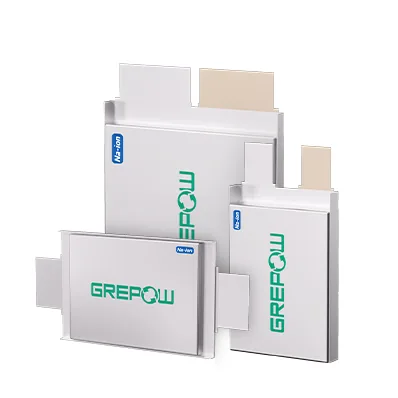
Pouch construction provides more freedom in length, width, thickness, and outline. Grepow can evaluate existing pouch cells, custom cell dimensions, protection circuits, leads, connectors, and battery structures as part of a project-specific solution. Learn more about Grepow LiPo battery ODM/OEM capabilities.
However, customization should solve a defined engineering problem. It may introduce development cost, tooling, qualification work, minimum-order requirements, and additional validation. If an approved standard cylindrical cell already satisfies the electrical, mechanical, service, and supply requirements, a custom pouch cell may not provide a meaningful benefit.
Transport, Safety, and Target-Market Requirements
Compliance requirements depend on whether the company is supplying a cell, battery module, charger, or complete wireless tattoo machine, as well as the destination market and transport method.
The project team may need to evaluate:
Applicable lithium-battery transport testing and documentation
Portable rechargeable battery safety standards
Cell and pack traceability
Charger and power-system requirements
Product marking and user instructions
Battery removal and replacement requirements
Recycling and end-of-life obligations
UN 38.3 belongs to the lithium-battery transport framework and should not be presented as a complete product-safety certification. The current requirements should be checked against the latest UN Manual of Tests and Criteria.
IEC 62133-2 specifies safety requirements and tests for portable sealed secondary lithium cells and batteries under intended use and reasonably foreseeable misuse. Its applicability should be confirmed for the product and certification route. (IEC 62133-2)
Products intended for the European Union should also be evaluated against Regulation (EU) 2023/1542. Its requirements cover areas including sustainability, safety, marking, information, and battery removal or replacement. The relevant obligations, implementation dates, and possible exceptions should be reviewed for the specific product. (EU Battery Regulation)
How Grepow Evaluates a Wireless Tattoo Pen Battery Project
For a new wireless tattoo pen or wireless tattoo machine, Grepow begins with the device requirements rather than a target capacity alone.
The most useful project information includes:
Maximum battery dimensions or 3D cavity data
Device input-voltage range
Normal working current
Startup and maximum peak current
Target runtime
Maximum battery or module weight
Charging voltage, current, and charging-time target
Built-in or removable architecture
Connector, tab, and lead requirements
Operating and storage temperature
Target sales markets
Project stage and expected annual volume
Based on this information, the engineering team can evaluate whether the project should retain a standard cylindrical architecture, use an existing pouch cell, or proceed to a custom pouch cell and integrated battery module.
Grepow supports custom battery-cell, protection, connection, and structural evaluation for portable electronic devices. Learn more about our custom battery solutions, or send us the available battery envelope and measured power profile to begin a feasibility review.
FAQ
What kind of battery does a wireless tattoo pen use?
Most wireless tattoo pens use rechargeable lithium-ion batteries. Some use replaceable 18500 cylindrical cells, while others use built-in or removable battery modules. The module format alone does not identify the cell construction inside it.
Is an 18500 battery the same as an 18650 battery?
No. They are different cylindrical cell sizes. An 18650 cell is generally longer than an 18500 cell and should not be treated as a direct substitute. Use only a cell type approved for the device's dimensions, contacts, charging system, current requirement, and protection design.
Can a higher-mAh battery be installed in a wireless tattoo machine?
Not based on capacity alone. The replacement must also match the permitted chemistry, voltage, dimensions, terminal design, current capability, charging method, protection requirements, and manufacturer instructions.
Why can a 3.7V battery power a tattoo machine rated at 12V?
The battery may supply a boost converter that raises and controls the voltage delivered to the motor. The 4–12V setting shown by the device is therefore not necessarily the battery-pack voltage.
How long will a 1500mAh wireless tattoo pen battery run?
Runtime cannot be determined from 1500mAh alone. It depends on battery voltage, motor load, operating setting, conversion efficiency, cutoff voltage, temperature, battery age, and usage pattern. Runtime should be measured in the final device under defined conditions.
Is a cylindrical cell or pouch battery better for a wireless tattoo pen?
Neither format is universally better. Cylindrical cells can offer standardization and easier replacement, while pouch cells provide greater dimensional flexibility. The correct choice depends on the available space, current profile, weight distribution, service strategy, cost, and validation requirements.
What information is required for a custom tattoo pen battery?
Provide the battery cavity dimensions, voltage, average and peak current, target runtime, weight limit, charging requirements, module structure, connector needs, operating temperature, target market, expected volume, and project stage.