












Quick Answer: A smart earring does not have one standard battery capacity. Its power requirement depends on what it measures, how often it samples, how much data it processes, how frequently it uses Bluetooth, and how long it must run between charges. Public examples range from low-tens-of-milliamp-hour micro batteries to a 50mAh research cell, but capacity alone cannot predict runtime. Engineers need a mode-based power budget that includes both average current and short peak loads.
In our earlier guide, we explained what AI earrings are and what they can monitor. This article stays on the power side of the product. At Grepow, we translate the sensing and communication workload into a battery requirement that fits the available weight and space. A temperature sensor that wakes occasionally has a very different load profile from an optical sensor collecting continuous pulse data.

Why Battery Design Matters in Smart Earrings
A smart earring has to balance four competing requirements: size, weight, runtime, and performance. Increasing battery capacity can extend runtime, but it also tends to increase mass and occupied volume. Reducing sensing or wireless activity saves energy, but it may reduce data density or delay updates.
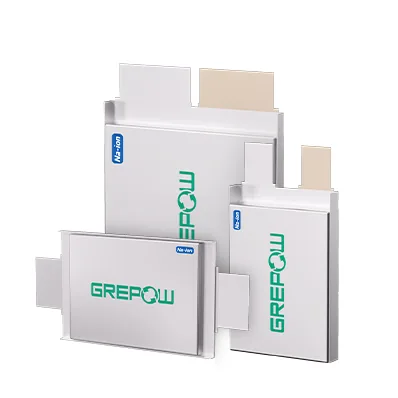
The constraint is visible in published hardware. A University of Washington PPG earring batched 25 PPG and motion samples into a 227-byte Bluetooth packet, allowing its microcontroller to wake every 500 milliseconds rather than for every sample. Even with that strategy, a 50mAh Grepow GRP1240 cell delivered about 21 hours of continuous sensing at 50Hz, showing how data handling affects a jewelry-scale energy budget. (University of Washington PPG Earring study)
Battery design therefore begins with the target experience: continuous monitoring, periodic wellness checks, overnight operation, or several days between user interactions. That choice determines the sensing schedule and power architecture before it determines cell capacity.
What Uses Power Inside a Smart Earring
A useful power budget separates the earring into operating blocks. Sensors, the processor, the wireless radio, memory, indicators, and the power-management circuit draw current at different times and at different levels.
Sensors
Temperature and motion sensors can run at very low power when configured for slow sampling or event detection. Optical PPG is usually more demanding because its LEDs must illuminate tissue while the photodetector and analog front end capture a usable signal. LED current, the number of measurements, frame rate, integration time, and settling time all contribute to PPG power consumption. (Analog Devices)
Processor
The microcontroller coordinates sensors, filters or packages data, manages storage, and controls the radio. Its sleep current may be tiny, while active processing draws much more. Texas Instruments recommends treating standby, protocol events, and application events as separate contributors to average current because the processor and peripherals can materially change the result even when the radio is marketed as low power. (Texas Instruments)
Bluetooth
Bluetooth Low Energy is efficient because the radio can remain inactive between short communication events. It is not free. Connection interval, peripheral latency, payload size, transmit power, and transfer frequency determine how often the radio wakes and how long it remains active. The Bluetooth SIG notes that skipping unused connection events lowers radio duty cycle, while higher-duty-cycle operation supports more immediate or higher-bandwidth communication. (Bluetooth SIG)
Indicators and Other Components
Status LEDs, vibration motors, onboard memory, voltage regulators, and battery monitoring all add load. Firmware updates, pairing, data downloads, and fault states also belong in the budget even if they do not occur every day.
How Much Battery Capacity Does a Smart Earring Need?
There is no defensible universal number. Capacity should be calculated from time spent in each operating mode, not copied from another wearable. A practical first estimate uses:
Average current = the sum of current in each mode multiplied by time in that mode, divided by the total operating period.

Engineers can then estimate ideal runtime by dividing usable battery capacity by average current. The word usable is important. Nominal capacity can differ from effective capacity because of discharge rate, peak loads, temperature, cutoff voltage, conversion losses, aging, and reserve requirements. Nordic Semiconductor’s low-power design training uses this same mode-based method and warns that a Bluetooth device may have low average current while still producing much higher radio peaks. (Nordic Semiconductor)
Two additional public examples broaden the range without defining a standard:
Maxell’s published 2022 specification for a 13mAh rechargeable coin cell measuring 6.8mm in diameter and 4.0mm high shows that low-tens-of-milliamp-hour storage is technically practical for miniature wearable and IoT hardware. It is an engineering scale reference, not a current purchasing recommendation or a guaranteed smart earring runtime. (Maxell)
A commercial smart earring advertises five to eight days of use with a swappable battery pack. Its public product information also describes continuous health tracking, but it does not make the research prototype’s sensor schedule, firmware, and battery specification directly comparable. (Lumia Health)
These examples span different products, batteries, and measurement strategies. They show why an OEM should specify the desired sensing schedule and charging experience before setting a capacity target.
Why Sampling Rate Changes Battery Life
Sampling rate changes how often a sensor, analog front end, processor, and sometimes the radio must wake. A temperature reading every few minutes may allow long sleep periods. PPG captured every few seconds requires more frequent LED pulses and processing, while live monitoring can keep several blocks active almost continuously.
The relevant measure is duty cycle: the share of time each block spends active. A sensor that draws 5mA for 5 milliseconds does not create the same average load as one that draws 5mA continuously. Event-triggered sensing, short measurement windows, FIFO buffering, and scheduled synchronization can reduce active time when the use case does not require continuous measurement.
Why BLE Can Matter More Than Expected
BLE design must account for average and peak current. Average current determines how quickly stored energy is consumed. Peak current determines whether the battery can support a radio event without excessive voltage drop or a reset. A very small cell may pass the average-current calculation and still struggle with short transmit or startup pulses if its internal resistance is too high.
Transmission frequency also matters. Sending every sample immediately creates many radio events. Buffering multiple samples into one packet can reduce wakeups, although it adds memory use and delays delivery. Connection interval and transmit power should be chosen around the required latency and range rather than left at an aggressive default.
At Grepow, we ask for average current, peak current, peak duration, and repetition rate. Those details help determine whether the proposed cell can maintain stable voltage throughout sensing and communication events.
Fixed, Swappable, or Case Charged?
The charging architecture changes what “battery life” means to the user. It also affects enclosure size, sealing, contacts, and daily behavior.
Fixed rechargeable battery: The cell remains inside the earring and is charged through contacts or another integrated charging method. This can simplify daily handling, but the earring is unavailable or tethered during charging.
Swappable battery: A charged module can replace a depleted one, supporting near-continuous wear. The mechanical interface, retention, polarity protection, and environmental sealing become part of the product design.
Case-charged architecture: A storage case replenishes the earring between wearing sessions. The earring may use a smaller cell, but real-world runtime now depends on how often the user returns it to the case and how much energy the case stores.
This article only compares the user-level tradeoffs. Coil placement, charging contacts, PCB layout, and conversion loss belong to the complete smart earring system design rather than to battery capacity selection alone.
What Battery Characteristics Matter Most?
Capacity alone is not enough to select a smart jewelry battery. We also review:
Cell dimensions and finished-pack dimensions
Battery weight and its effect on total earring mass
Usable capacity under the expected load and cutoff voltage
Continuous and pulse discharge capability
Internal resistance and voltage behavior during BLE peaks
Cycle-life target and expected charging frequency
Charge current, charge time, and thermal limits
Terminal direction and the available mechanical clearance
These requirements have to be evaluated together. A cell with higher nominal capacity may be the wrong choice if it makes the earring uncomfortable, cannot support a radio pulse, or leaves too little space for the sensor to maintain skin contact. Our wearable battery development work therefore starts with the device load profile, battery envelope, weight target, and charging plan rather than an isolated mAh request.
Conclusion
A smart earring’s runtime depends on how long each subsystem remains active. Sensors create the measurements, the processor prepares the data, and BLE moves it to a phone. The combined duty cycle and the cell’s usable performance under average and peak loads determine the result.
For developers, the most reliable sequence is straightforward: define the sensing modes, estimate and measure current in each mode, set the communication schedule, add realistic losses and reserve, then evaluate capacity, weight, discharge performance, and charging together. That process produces a defensible battery requirement and makes later mechanical customization much easier.
FAQ
How long does a smart earring battery last?
Runtime can range from about a day of demanding continuous sensing to several days for an optimized commercial design. The result depends on sensor type, sampling rate, Bluetooth activity, firmware, battery capacity, and how the device is charged.
Do health tracker earrings need to be charged every day?
Not necessarily. A high-rate continuous monitor may need frequent charging, while intermittent sensing and batched syncing can extend use. Check whether the stated runtime reflects continuous measurement, periodic measurement, or standby.
How should an OEM calculate battery capacity for a smart earring health tracker?
List sleep, sensing, processing, transmission, and indication modes, then weight each mode’s current by its active time. Apply conversion losses, cutoff voltage, aging, temperature, reserve, and the required operating hours before selecting nominal capacity.
Why must we specify both average current and BLE peak current?
Average current drives energy consumption and estimated runtime. Peak current and pulse duration determine whether the cell can maintain voltage during startup or radio events, especially when cell capacity is very small or internal resistance is relatively high.
Should a smart earring use a fixed, swappable, or case-charged battery?
Choose from the intended wearing and charging behavior. Fixed cells simplify the module, swappable packs support continuous wear, and charging cases enable frequent top-ups; each option changes enclosure, sealing, contacts, and usable battery space.