


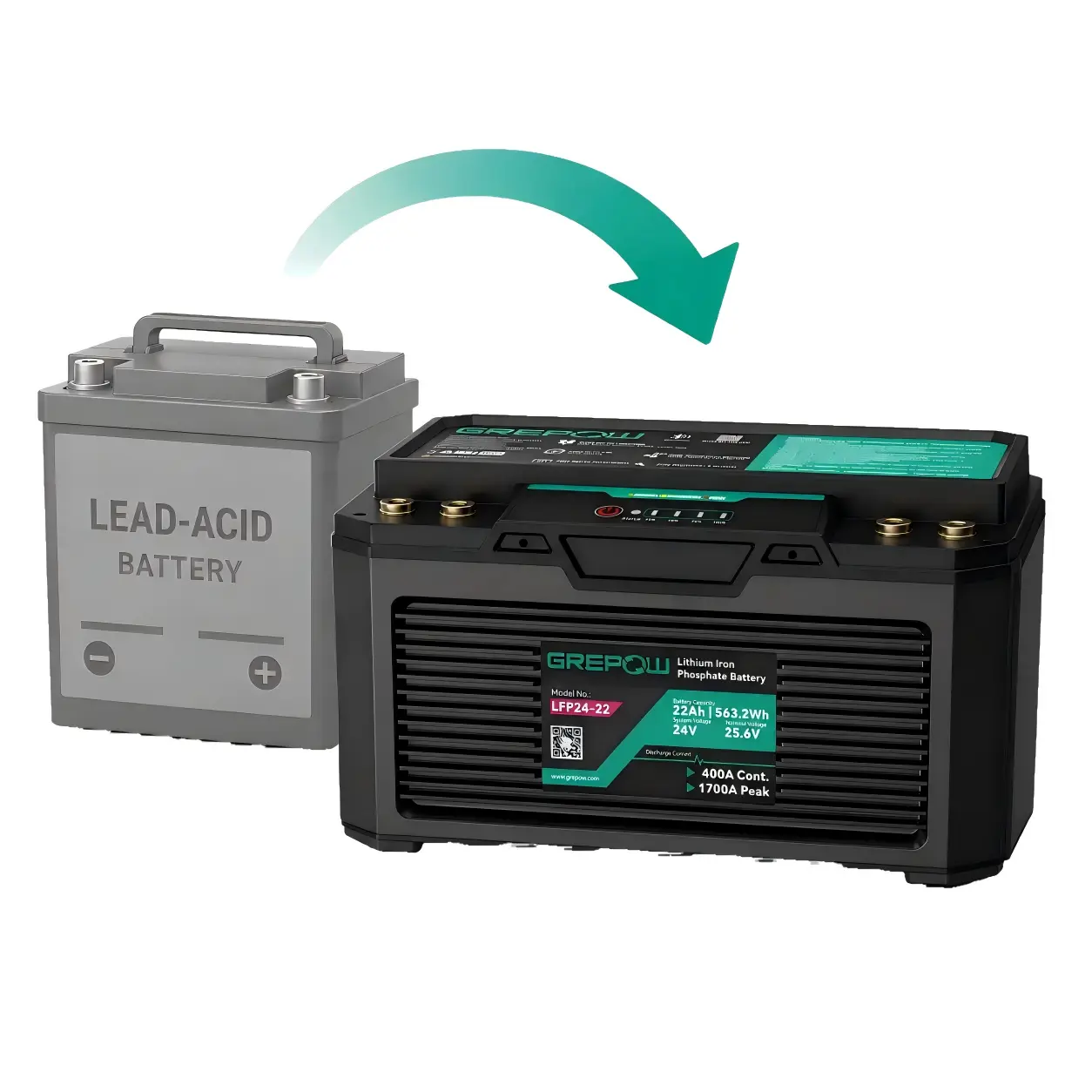
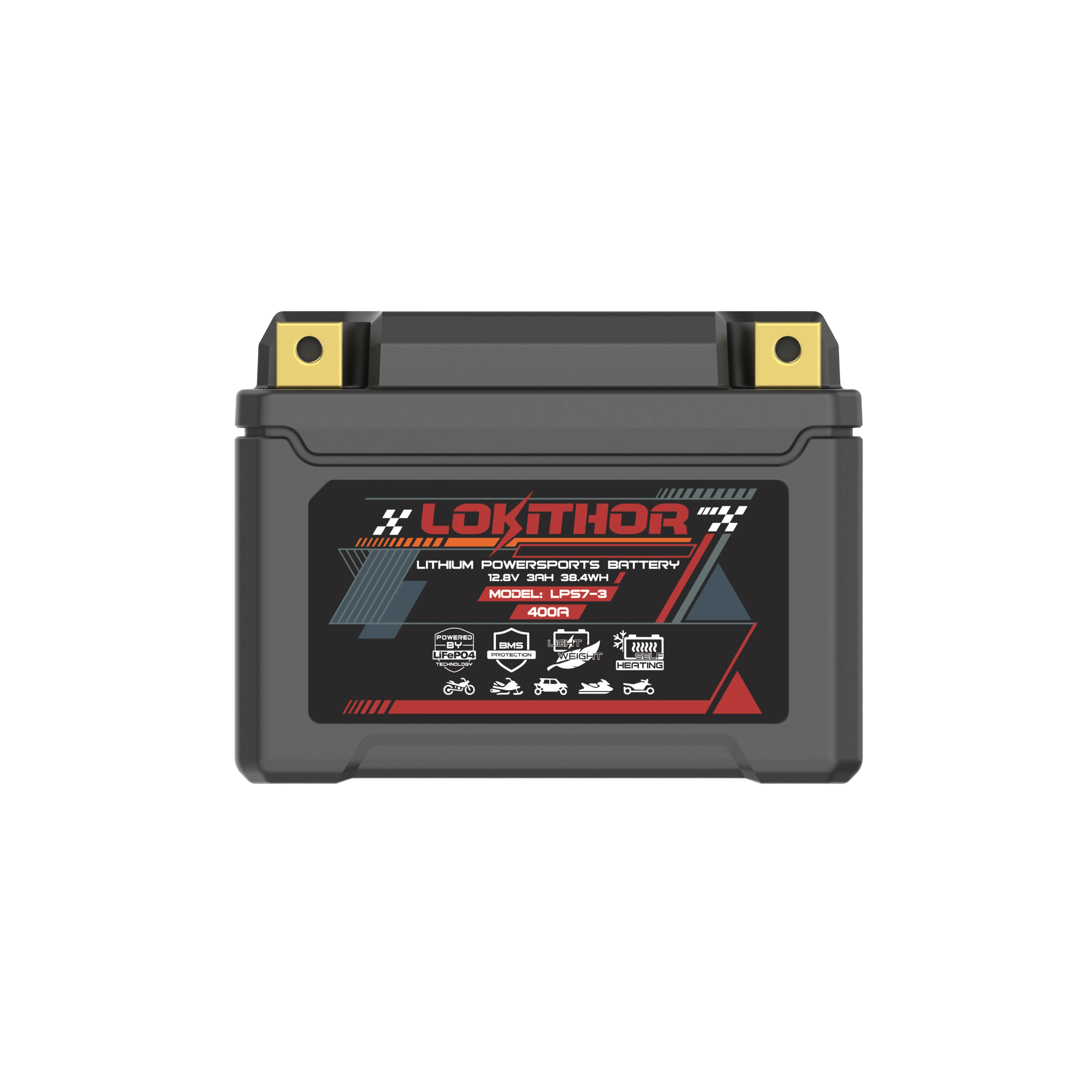


An electric go-kart battery should not be specified by voltage, Ah, and C-rate alone.
At Grepow, the kart projects we evaluate often arrive with seemingly clear requirements: a 72V-class system, a target capacity, a motor power rating, or a desired discharge rate. Once we start reviewing the complete operating conditions, those numbers usually raise another set of questions.
Is 72V the nominal voltage or the maximum pack voltage? Is the stated C-rate continuous or only required during acceleration? Does the target battery weight include the enclosure, BMS, connectors, and cooling structure? How often will peak power occur during a lap?
These details can materially change the battery design.
SAE research on electric-vehicle power requirements reached the same basic engineering conclusion: power-source requirements depend on desired vehicle performance and actual vehicle usage, not simply a single rated-power number. (SAE International: Power Requirements of Electric Vehicles)
For an OEM or vehicle developer, we recommend working backward from the kart:
Operating profile → voltage window → energy requirement → continuous and peak current → weight and packaging → pack-level requirements

Start With How the Kart Will Actually Be Used
The first question we ask is not "What battery chemistry do you want?" It is "What does the kart need to do?"
A useful project definition normally includes:
Motor rated and peak power
Controller voltage and current limits
Vehicle and driver weight
Required session time
Track characteristics
Acceleration frequency
Regenerative braking, if applicable
Ambient temperature
Available battery space
Fixed or removable battery design
These requirements matter because an electric rental kart, racing kart, drift kart, and off-road kart can create very different battery loads even when their nameplate motor power looks similar.
High-performance driving is a good example. Research published in the Journal of Energy Storage found that conventional battery test cycles do not adequately represent high-performance and racing operation. Racing-oriented duty cycles contained different power-pulse frequencies, durations, charging and discharging behavior, and produced substantially higher cell temperatures. (Journal of Energy Storage: Battery Cycle Life Test Development for High-Performance Electric Vehicle Applications)
This is why a real current or power trace from the kart is especially valuable. If that data is not available, we build the initial specification around the expected duty cycle instead of assuming maximum motor power represents normal battery load.
Define Voltage as an Operating Window, Not a Label
"48V" and "72V" are useful product descriptions, but they are incomplete engineering specifications.
In one high-performance electric-kart specification we evaluated, the project called for approximately 1.5kWh of energy, a maximum voltage of about 72VDC, 4.5kW continuous discharge power, and 10kW peak power, with air cooling preferred.
The phrase maximum voltage of 72VDC matters.
If we incorrectly treated 72V as the nominal operating voltage, the rest of the electrical design could be misleading. Before selecting cell count or finalizing the pack, we would still need to establish:
Maximum charged voltage
Nominal voltage
Minimum operating voltage
Controller operating range
Low-voltage cutoff
Regenerative charging voltage limits
Use Power to Check the Current Requirement
The basic relationship is:
I = P / V
At 72V:
4.5kW / 72V = 62.5A
and:
10kW / 72V = approximately 139A
But 72V in this project is the maximum voltage. As pack voltage falls, delivering the same 10kW requires more current than 139A.
That affects more than the cells. The BMS, fuse, contactor, busbars, cables, connectors, and cooling path all need to be checked against the real operating-current range.
This is one reason we do not begin detailed pack design until the meaning of the system voltage has been clearly defined.
Calculate Required Energy Instead of Choosing Ah First
Ah is one of the most common ways batteries are described, but it is not a direct measure of vehicle runtime.
Battery energy is:
Energy (Wh) = Voltage (V) × Capacity (Ah)
A 30Ah battery at one system voltage does not store the same energy as a 30Ah battery at another voltage.
The more useful question for a kart developer is:
How much usable energy does the vehicle need to complete the required operating session?
A first estimate can be expressed as:
Required usable energy ≈ average duty-cycle power × required runtime
Motor rated power should not automatically be used as average power consumption. A kart alternates between hard acceleration, partial throttle, cornering, braking, and sometimes regenerative charging.
This is exactly why the 1.5kWh high-performance project above cannot be evaluated by looking only at its 10kW peak rating. Peak power tells us about power capability; the required 1.5kWh tells us about the energy target. They solve two different parts of the specification.
At Grepow, measured current and voltage logs are preferable whenever a prototype vehicle already exists. They let us separate short acceleration peaks from the average energy demand over a lap or session.
Define Continuous Current, Peak Current, and Peak Duration Separately
High-rate battery specifications often look straightforward until we ask what the stated discharge rate actually means.
We have evaluated an off-road kart requirement built around a 14.2Ah semi-solid-state cell with a requested 5-7C discharge capability.
On paper:
14.2Ah × 5C = 71A
14.2Ah × 7C = 99.4A
Those calculations are useful, but they do not complete the specification.
We still need to know:
Is 5-7C continuous or pulse discharge?
How long must the peak last?
How often does it repeat?
At what SOC must the battery still deliver that power?
What is the expected cell temperature?
How much voltage sag is acceptable?
Another off-road kart specification we reviewed called for a 72V soft-pouch lithium battery, 12-20Ah capacity, 5-7C discharge, and a 300-cycle target.
That single requirement already contains several engineering trade-offs. Depending on capacity and discharge rate, the stated current range can extend from roughly 60A at 12Ah/5C to 140A at 20Ah/7C. The cycle target also means power capability cannot be evaluated independently from temperature and degradation.
NREL battery-life modeling treats temperature, SOC, depth of discharge, cycle count, and operating conditions as interacting factors in capacity loss and resistance growth. This supports the way we approach high-rate pack design: a current rating without its operating conditions is incomplete. (National Renewable Energy Laboratory: Battery Life Modeling)
Why C-Rate Alone Is Not Enough
C-rate is a useful shorthand, especially during early project discussions. It is not proof of finished-pack performance.
Pack-level output also depends on:
Cell DC internal resistance
SOC
Cell temperature
Aging
Interconnect resistance
Busbar design
Cable length and gauge
Connector resistance
BMS current limits
Heat dissipation
At Grepow, we therefore treat C-rate as an input to the design process.
The more meaningful engineering question is:
Can the finished pack repeatedly deliver the required current under the expected SOC and temperature conditions without unacceptable voltage drop, heat buildup, or degradation?
That ultimately requires pack-level validation.
Balance Runtime Against Weight and Available Space
Battery requirements can become contradictory very quickly.
One 12S smart swappable-pack specification we evaluated called for 30Ah capacity and an ideal complete-pack weight of about 6kg, while also requiring high-rate performance.
The capacity target is clear. The 6kg target is also clear. But before we can determine whether both are achievable, we need another definition:
What is included in the 6kg limit?
Does it mean:
Cells only?
Cells plus BMS?
Complete enclosure?
Main connector?
Handle and swap mechanism?
Thermal structure?
For an OEM, this distinction is important. Cell-level energy density cannot be directly compared with a finished battery pack that includes protection electronics, structural components, connectors, insulation, and cooling provisions.
Argonne National Laboratory's BatPaC model uses a similar system-level approach. It takes user-defined power, energy, and charging requirements and calculates pack-level characteristics including mass and dimensions by accounting for the components needed to build the complete battery. (Argonne National Laboratory: BatPaC Battery Manufacturing Cost Estimation)
This is why we do not simply ask how many Ah can fit into a kart.
We ask:
What is the minimum battery system that can meet the required energy and power targets within the available mass and packaging envelope?
Once that envelope is clear, chemistry selection becomes much more meaningful. High-rate LiFePO4, high-rate pouch LiPo, and semi-solid-state batteries solve different combinations of power, weight, cycle life, and packaging requirements. That comparison should come after the vehicle specification is defined, not before it.
Do Not Ignore Cell and Pack Dimensions
In some projects, electrical performance is not the first hard limit. Physical packaging is.
We regularly work with applications where cell thickness, width, height, or pack geometry is fixed by the vehicle before battery development begins. A technically suitable high-energy cell is not useful if the resulting module cannot be installed, cooled, restrained, or serviced within the chassis.
This becomes more important with:
Low seating positions
Side-mounted battery modules
Swappable packs
Narrow chassis structures
Weight-distribution targets
Existing vehicle platforms being converted to electric drive
For this reason, we recommend giving the battery supplier an actual installation envelope, not just a desired capacity.
CAD dimensions, mounting points, connector direction, allowable service space, and cooling-air path can save substantial redesign work later.
Define the Battery as a Pack, Not Just a Group of Cells
Cell performance is only one part of an electric go-kart battery system.
A complete high-power pack may also require:
BMS
Fuse
Main contactor
Pre-charge circuit
Temperature sensors
Busbars
High-current cables
Vehicle connector
Charging connector
Mechanical enclosure
Cooling provisions
CAN or other communication
Service-disconnect or interlock functions where required
The electrical path from the cells to the vehicle interface must support the intended current.
A cell may perform well in an individual discharge test while the complete battery is limited by a connector, contactor, busbar, thermal bottleneck, or protection setting.
UL Solutions takes the same pack-level view in battery evaluation, using electrical, mechanical, and environmental tests to assess battery modules and packs under defined charge, discharge, and abuse conditions rather than treating cell data as sufficient evidence for a finished battery system. (UL Solutions: Battery Module and Pack Testing for Manufacturers)
For Grepow, this is especially important in high-rate applications. High current makes milliohms matter.
Build a Complete Electric Go-Kart Battery Requirement Sheet
A good initial specification does not need to contain every detail of the final battery. It should contain enough information to prevent the wrong architecture from being selected at the beginning.
We recommend providing the following information before detailed battery development:
| Requirement | Information to Provide |
|---|---|
| Kart application | Rental, racing, drift, off-road, other |
| Motor | Rated and peak power |
| Controller | Voltage range, continuous and peak current |
| Battery voltage | Maximum, nominal, and minimum operating voltage |
| Continuous power | Required sustained output |
| Peak power | Maximum short-duration output |
| Peak duration | Seconds per peak event |
| Peak frequency | How often high-power events repeat |
| Runtime | Required session or operating time |
| Energy | Target usable Wh or kWh |
| Capacity | Target Ah, if already defined |
| Weight | Maximum complete-pack weight |
| Packaging | Maximum L × W × H and mounting constraints |
| Environment | Temperature, vibration, shock, dust, or water exposure |
| Cooling | Passive, air-cooled, or other |
| Charging | Charge-power and charge-time targets |
| Regeneration | Maximum expected regenerative current |
| Communication | CAN, UART, or other protocol |
| Installation | Fixed or swappable pack |
| Lifecycle | Target cycles or operating hours |
| Market | Intended countries or regions |
The final market matters because transportation requirements have to be considered at the battery level. UNECE's current Manual of Tests and Criteria includes Section 38.3 requirements for lithium cells and batteries before transport of a particular battery type, and changes that materially affect test results can require a battery to be treated as a new type. (UNECE: UN Manual of Tests and Criteria, Revision 8 and Amendment 1)
Applicable product and vehicle standards still need to be determined project by project. Cell-level documentation should not automatically be treated as certification of the finished kart battery pack.
From Vehicle Requirements to a Feasible Battery Design
The electric-kart specifications we see make one point clear: battery requirements interact with each other.
A 1.5kWh pack with a 10kW peak requirement is an energy-and-power problem.
A 14.2Ah cell requested at 5-7C is a power, temperature, and pulse-duration problem.
A 12S 30Ah swappable pack targeted at roughly 6kg is a power, packaging, and mass problem.
A 72V, 12-20Ah off-road pack with a 5-7C discharge target and 300-cycle requirement adds lifecycle and environmental constraints.
None of these can be solved reliably by choosing the battery with the highest advertised C-rate or the largest Ah number.
At Grepow, we start with what the kart needs to accomplish and work backward:
Duty cycle → voltage window → energy → continuous and peak current → weight and packaging → pack architecture
That produces a specification that engineers can test, suppliers can quote against, and both sides can refine as the vehicle moves from prototype to validation.
Only after those boundaries are clear do we decide whether high-rate LiFePO4, high-rate pouch LiPo, or a semi-solid-state solution provides the right engineering trade-off.
The better first question is not:
"Which electric go-kart battery should we buy?"
It is:
"What does our kart require the battery to deliver?"
FAQ
Can I use any 72V lithium battery with a 72V electric go-kart motor?
No. "72V" may refer to nominal voltage, maximum voltage, or a system class. Check the battery's full-charge and minimum operating voltages against the motor controller, then verify that the pack can supply the required continuous and peak current.
How many Ah does an electric go-kart need for longer runtime?
Start with required usable energy rather than Ah alone. Estimate average power over the actual driving cycle and multiply it by the target runtime, then convert the required Wh into Ah using the selected battery voltage.
If our electric go-kart controller can demand 10kW peak power, how should we specify the battery current rating?
Calculate current across the complete operating-voltage range, especially near the low-voltage end, and define peak duration and repetition frequency. The pack must also be checked for voltage sag, temperature rise, BMS limits, connector capacity, and repeated peak performance.
How should an OEM evaluate a 5-7C battery requirement when the kart has repeated acceleration peaks?
Do not specify 5-7C without defining whether it is continuous or pulse discharge. Provide peak duration, repetition frequency, SOC range, temperature, and acceptable voltage drop so the supplier can validate the requirement against the real duty cycle.
What information should we provide Grepow before requesting a custom electric go-kart battery?
Provide motor and controller limits, voltage range, continuous and peak power, runtime, available battery space, maximum pack weight, operating environment, charging requirements, lifecycle target, and any existing vehicle data. A current or power trace from a prototype is especially useful for sizing the pack accurately.


