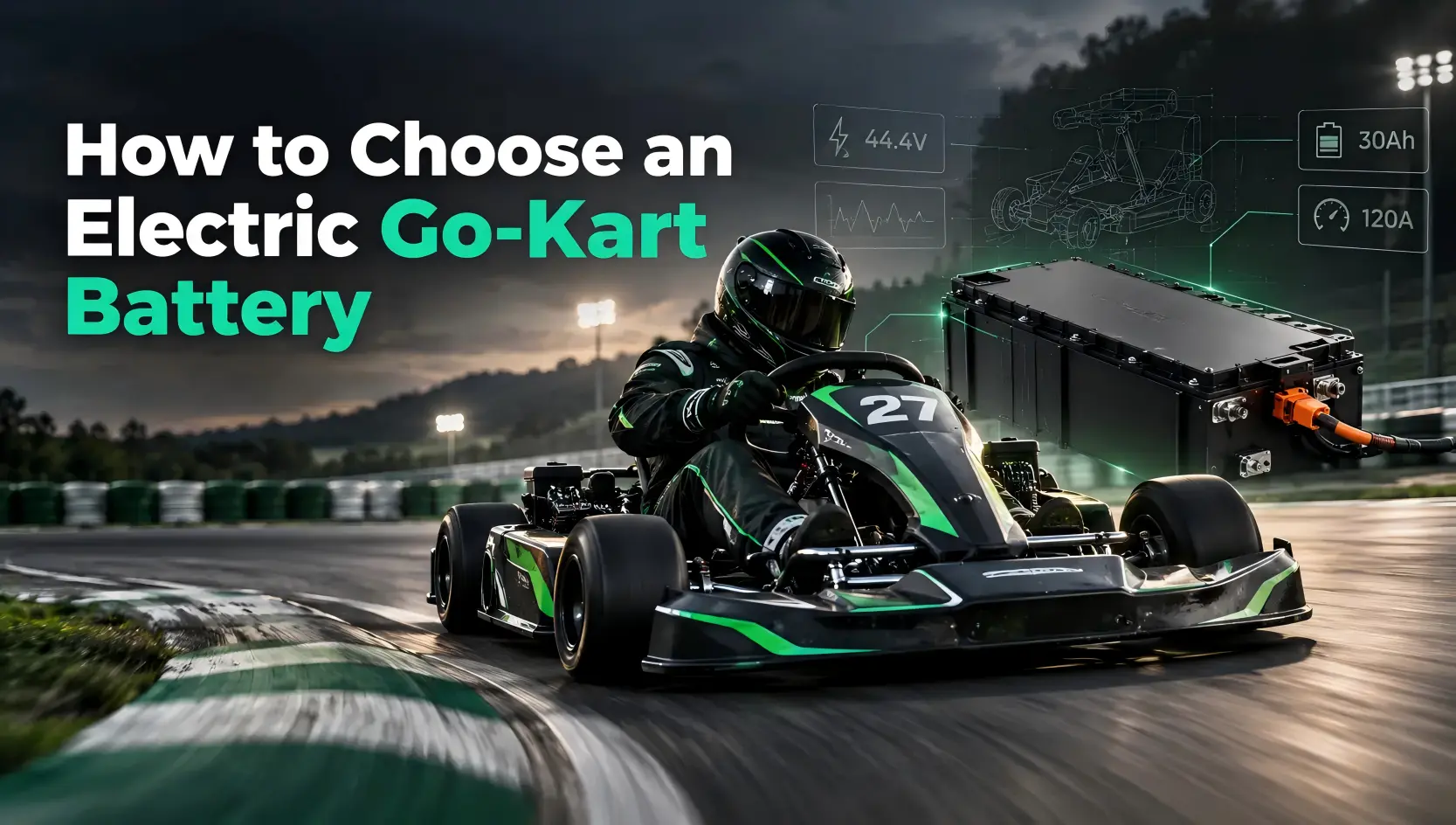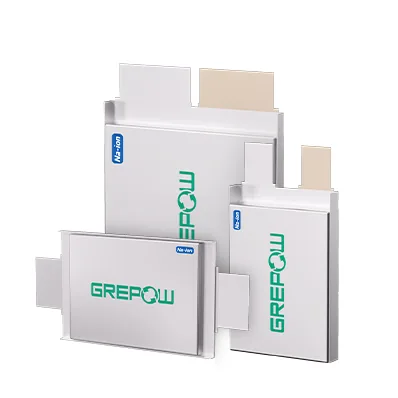





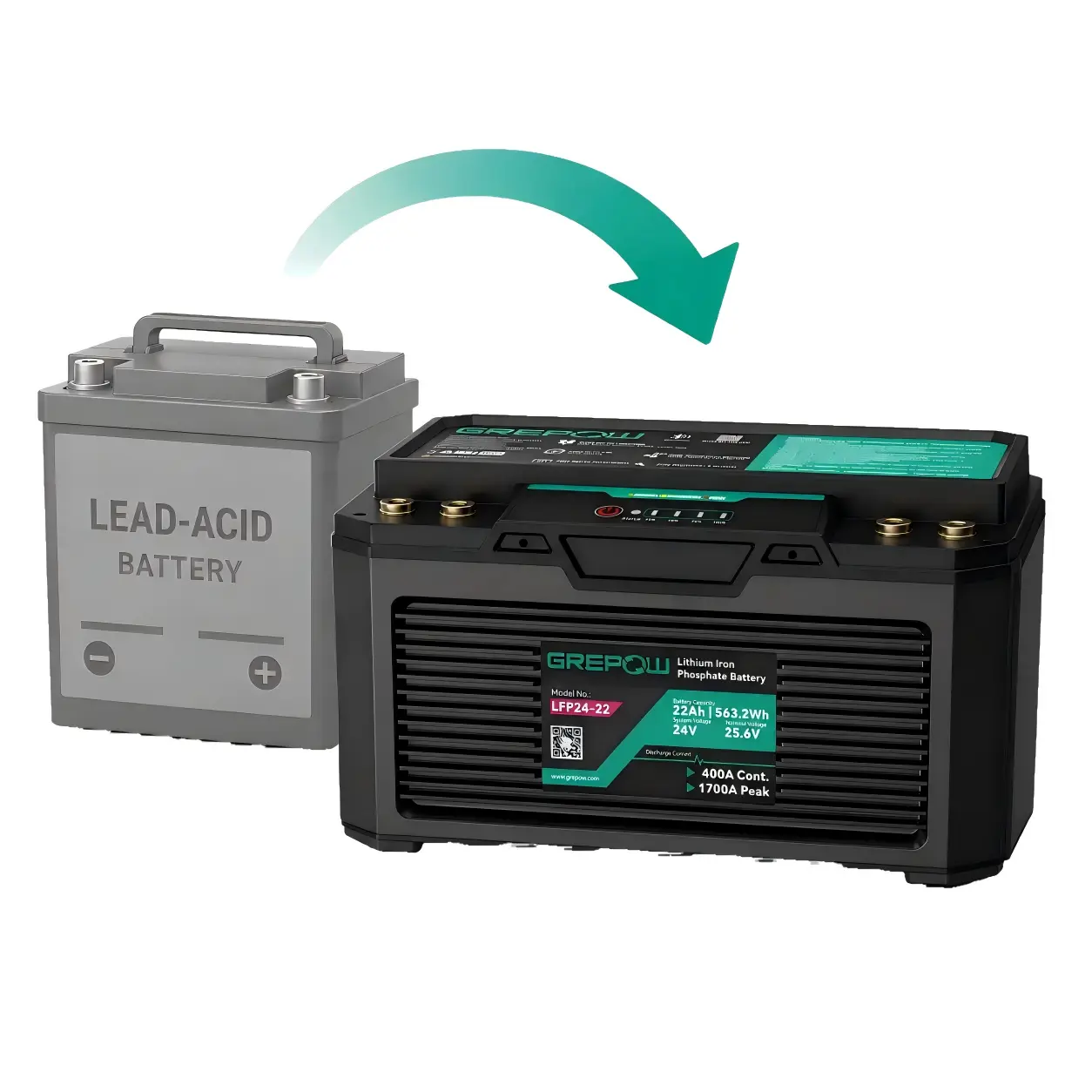
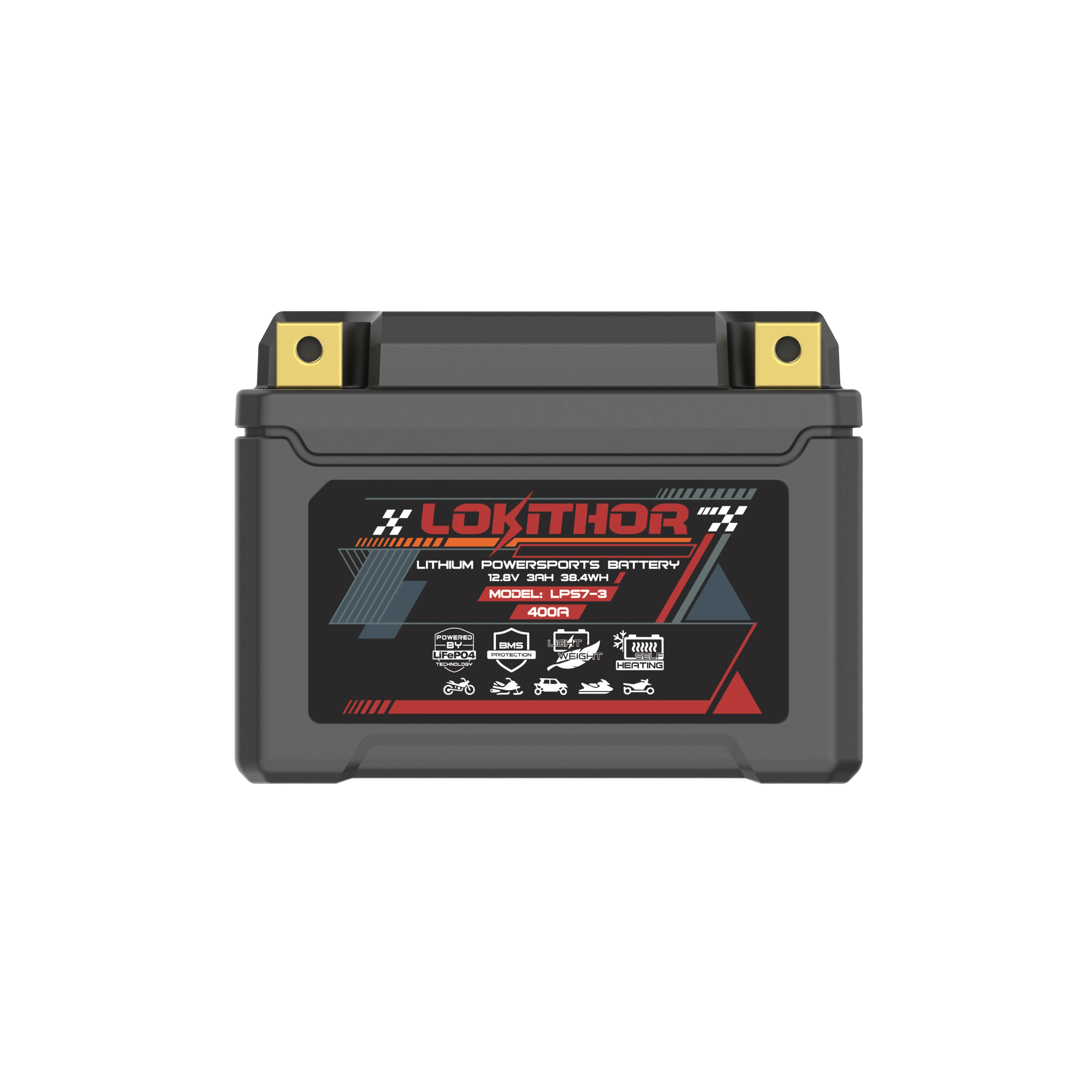









Choosing the right battery chemistry for an electric go-kart depends on its power requirements, weight limits, duty cycle, and expected service life. High-rate LiFePO4 (LFP) is often suitable for commercial rental karts that prioritize durability and cycle life. High-rate pouch LiPo is a strong option for racing and drift karts requiring repeated peak power and lightweight packaging, while semi-solid-state batteries may offer advantages for weight-sensitive designs, provided their performance is validated.
At Grepow, we help OEMs evaluate these technologies based on real operating conditions. This guide compares their performance, application suitability, and engineering trade-offs to support informed battery selection.

Why Battery Chemistry Matters for Electric Go-Karts
Electric go-karts operate under different load conditions depending on their intended use.
A rental kart typically runs repeated driving sessions with frequent charging. A racing kart may experience aggressive acceleration and braking throughout a short, demanding session. Off-road karts introduce additional mechanical stress and changing motor loads.
These differences affect how the battery delivers power, manages heat, and retains performance over time.
Before comparing battery technologies, OEMs should already understand their vehicle's operating voltage, energy requirements, peak power, and available installation space. We cover that process in our electric go-kart battery specification guide for OEMs.
Battery technology selection begins after those requirements are reasonably defined.
Three characteristics deserve particular attention:
Power delivery: Can the battery repeatedly supply the required current without excessive voltage drop or temperature rise?
Weight and packaging: Can the finished battery pack fit within the vehicle's dimensional and weight limits?
Service life: Can the battery retain acceptable capacity and power performance over its intended operating life?

The terminology also matters. LFP identifies a cathode chemistry, LiPo commonly describes a category of lithium batteries associated with polymer-based or pouch-cell designs, and semi-solid-state refers to an electrolyte technology approach. They are not three mutually exclusive electrochemical classifications.
For this comparison, we use LiPo to describe conventional high-rate pouch lithium batteries commonly considered for performance applications.
Readers looking for a broader chemistry comparison can refer to our existing article, LiFePO4 vs. LiPo: What's the Difference?
High-Rate LFP Batteries: Stability and Cycle-Life Potential
Lithium iron phosphate batteries are worth considering when cycle life, thermal stability, and repeated daily use are important design priorities.
LFP's main strength is not achieving the lowest possible battery weight. It is providing a combination of material stability, durability, and relatively predictable performance when properly engineered.
The International Energy Agency identifies LFP as a lower-energy-density alternative to nickel-rich lithium-ion chemistries, while noting its lower flammability and longer lifetime potential. These characteristics help explain its suitability for applications that prioritize durability over maximum energy storage per kilogram. (International Energy Agency: Batteries and Secure Energy Transitions)
Why High-Rate LFP Is Different From Standard LFP
Not every LFP cell is designed for high-power traction applications.
Some LFP batteries prioritize energy storage and moderate discharge currents. Electric go-karts, particularly those requiring repeated acceleration, need cells capable of delivering higher current while controlling voltage drop and temperature rise.
A high-rate LFP solution should therefore be evaluated for:
Continuous and pulse discharge capability
Voltage response during repeated acceleration
Temperature rise across successive discharge events
Power retention at lower states of charge
Capacity and resistance changes after extended cycling

Long cycle life cannot be established from chemistry alone.
Research published by the National Renewable Energy Laboratory examined commercial LFP and NMC cells under different aging conditions. The findings showed that degradation behavior depends on cell chemistry, design, and operating conditions, with the tested LFP cell showing relatively low sensitivity to certain cycling conditions. (NREL: Degradation and Modeling of Large-Format Commercial Lithium-Ion Cells)
For a commercial kart manufacturer, high-rate LFP can be a reasonable starting point when frequent use and service life matter more than minimizing battery mass.
Its main limitation is the potential weight and volume penalty compared with some higher-energy lithium-ion cell designs.
High-Rate Pouch LiPo Batteries: Power and Lightweight Design
High-rate pouch LiPo batteries are particularly relevant when electric go-karts require strong acceleration, compact packaging, and careful weight management.
In performance-oriented designs, battery power capability can be just as important as stored energy.
A high-rate LiPo cell is engineered to support substantial discharge currents. Its actual performance depends on electrode design, internal resistance, thermal characteristics, and operating conditions.

Peak Power Under Repeated Acceleration
During acceleration, a kart's motor controller can demand substantial current from the battery. The resulting voltage drop affects the voltage available to the powertrain, while internal losses generate heat.
If resistance is too high, repeated high-current events can lead to significant heating and reduced available power.
Grepow's technical article on LiPo battery internal resistance explains how resistance contributes to voltage drop, heat generation, and changes in discharge performance.
For a racing kart, we would therefore evaluate high-rate LiPo using repeated current pulses rather than relying solely on a maximum discharge rating.
A cell that delivers a high current for a single short pulse may behave differently after multiple acceleration events, especially as its temperature and state of charge change.
Packaging Flexibility and Mechanical Protection
Pouch cells also offer flexibility when designing a battery around a limited vehicle installation space.
Cell dimensions and arrangement can be selected to work with the available mounting area, potentially supporting a lower-profile battery pack or a different weight distribution.
That flexibility does not eliminate the need for structural protection.
Pouch cells require appropriate compression or accommodation for dimensional changes, secure mounting, electrical insulation, and protection from mechanical damage. Battery enclosures must also account for vibration, shock, and thermal behavior.
For Grepow, a lightweight cell only becomes a useful kart battery solution when the complete pack can meet the project's mechanical and electrical requirements.
Semi-Solid-State Batteries: When Is Higher Energy Density Worth Considering?

Semi-solid-state batteries introduce another option for projects where energy storage and battery weight are especially difficult to balance.
Depending on the specific cell design, semi-solid-state technology can offer higher energy density than certain conventional lithium-ion alternatives.
This potential advantage matters when an OEM needs to reduce battery mass or fit more energy into a restricted installation space.
We explain the underlying technology in our article, What Is a Semi-Solid State Battery?
For electric go-karts, however, energy density is only part of the evaluation.
A high-energy cell is not automatically a high-power cell. Increasing energy density does not guarantee that the battery can withstand the repeated discharge currents required by a racing or off-road kart.
What Needs to Be Validated?
When evaluating a semi-solid-state solution, we focus on several questions:
Can the cell deliver the required continuous and peak current?
How much voltage drop occurs during high-current pulses?
Does repeated discharge cause excessive temperature rise?
How does capacity and power capability change with cycling?
Are dimensional changes and mechanical constraints compatible with the pack design?
These are particularly important because semi-solid-state technologies vary in electrolyte composition, electrode structure, and commercial maturity.
Research published in Nature Energy highlights the challenges that remain for related solid-state battery technologies, including specific power, long-term performance, and practical commercialization. Although semi-solid and fully solid-state systems differ, the research reinforces why advanced electrolyte technology should not be treated as a guarantee of high-rate performance. (Nature Energy: Challenges in Speeding Up Solid-State Battery Development)
We consider semi-solid-state batteries most relevant when conventional high-rate solutions cannot meet a project's energy and weight targets without significant compromises.
The decision still depends on the performance of the actual candidate cell and completed battery system.
LFP vs. LiPo vs. Semi-Solid-State: Engineering Comparison
Each battery technology addresses a different combination of performance requirements.
For electric go-kart OEMs, the comparison should be based on realistic operating conditions rather than the highest values listed in separate product datasheets.
The following table summarizes the main engineering considerations.
| Engineering Requirement | High-Rate LFP | High-Rate Pouch LiPo | Semi-Solid-State |
|---|---|---|---|
| Repeated peak power | Strong when designed for high-rate use | Strong potential with high-power cell designs | Cell-specific validation required |
| Energy density | Generally lower than higher-energy lithium-ion alternatives | Depends on cell chemistry and power optimization | Potential advantage in selected designs |
| Cycle-life potential | Often favorable | Depends on formulation and operating stress | Technology and cell dependent |
| Thermal behavior | Favorable material stability | Requires appropriate thermal management | Must be verified for the specific design |
| Weight-sensitive applications | May require more pack mass | Attractive with suitable high-energy, high-power cells | Potential fit where higher energy density is valuable |
| Packaging | Depends on cell format and pack construction | Flexible pouch-cell arrangements | Depends on cell construction |
| Main validation priority | High-rate performance and aging | Repeated power, heat, and mechanical protection | Power capability, aging, and system integration |
These are general technology characteristics, not guaranteed specifications for individual products.
Compare Complete Battery Packs, Not Just Cells
Cell-level energy density or maximum discharge current does not tell the full story.
The finished battery must accommodate the BMS, current-carrying components, electrical protection, wiring, mounting structure, and any necessary cooling provisions.
A cell that appears lighter on paper may offer a smaller advantage once these components are included.
Argonne National Laboratory's BatPaC model uses battery performance requirements to evaluate cell- and pack-level characteristics, including mass, dimensions, and cost. Its system-level approach reflects why battery comparisons should account for the components needed to build a complete pack. (Argonne National Laboratory: Battery Performance and Cost Model)
Energy density and power density also need to be considered separately. For additional background, our article on high energy density vs. high power density batteries explains why storing more energy and delivering more power are different design goals.
For a meaningful comparison, Grepow recommends evaluating candidate battery packs against the same energy target, load profile, temperature conditions, and usable operating window.
Which Battery Technology Fits Different Electric Go-Kart Applications?
Battery technology selection becomes more practical when we connect its characteristics to the vehicle's intended use.
Different kart applications place different levels of importance on acceleration, weight, service life, and environmental protection.

Commercial Rental Go-Karts
Commercial rental karts often operate through multiple driving sessions each day. Battery durability and consistent performance are important because the vehicles are intended for frequent use.
High-rate LFP is a strong candidate when cycle life, thermal stability, and long-term reliability are priorities.
The OEM must still confirm that the chosen cells can deliver the required acceleration power within the permitted weight and installation space.
High-rate LiPo may also be appropriate when weight or packaging constraints justify a different balance of performance and service life.
Racing Go-Karts
Racing karts place greater emphasis on acceleration response, repeated peak current, and vehicle weight.
High-rate pouch LiPo can be attractive because suitable cell designs offer strong power delivery with relatively flexible packaging.
However, a lighter battery is not automatically a better racing battery. The pack must maintain sufficient voltage and current capability throughout the intended driving session.
Semi-solid-state technology may also be considered when energy and weight targets are especially demanding, provided its high-rate performance has been validated.
Electric Drift Karts
Electric drift karts may experience frequent changes in torque demand as drivers repeatedly accelerate, modulate power, and transition between maneuvers.
The battery must tolerate the resulting load fluctuations without excessive voltage drop or thermal buildup.
High-rate LiPo is worth evaluating where responsive power delivery is a priority. High-rate LFP may be suitable when the design places greater importance on operating life and durability.
The actual current profile should determine which candidate is more appropriate.
Off-Road Electric Go-Karts
Off-road karts combine varying propulsion loads with vibration, shock, and potentially harsh environmental conditions.
The battery system must deliver sufficient current for acceleration and climbing while remaining mechanically secure and protected from environmental exposure.
Both high-rate LFP and high-rate pouch LiPo can be considered, depending on the project's weight, power, and durability requirements.
For this application, enclosure design, mounting, connector security, and environmental validation may be just as important as cell selection.
How OEMs Should Validate the Final Battery Chemistry
Once the most promising technology options have been identified, the next step is to compare them using an appropriate test plan.
At Grepow, we recommend starting with the kart's actual load requirements and establishing common evaluation conditions for the candidate batteries.
Compare Performance Under the Same Operating Conditions
A useful evaluation should include the following:
Repeated pulse discharge: Test whether the battery maintains the required power across multiple acceleration events. Record current, voltage, pulse duration, and recovery behavior.
Low-SOC performance: Verify that the required power remains available near the lower end of the intended operating window, rather than testing only with a fully charged battery.
Thermal performance: Measure cell and pack temperatures during representative operating sequences. Identify whether repeated loading produces unacceptable temperature rise.
Weight and packaging: Compare complete battery pack mass and dimensions, including the enclosure, BMS, wiring, and protection components.
Aging and durability: Assess capacity retention, resistance growth, and power performance after cycling under relevant operating conditions.
These tests provide a more reliable basis for comparing technologies than isolated claims about maximum C-rate, energy density, or cycle life.
Validate the Complete Pack Before Final Integration
Cell-level test data should be followed by pack-level verification.
The battery must operate within the controller's electrical limits while meeting the project's requirements for protection, temperature monitoring, vibration resistance, and mechanical integration.
UL Solutions describes battery module and pack evaluation as a combination of electrical, mechanical, and environmental testing, including charge-discharge cycling and simulated abuse conditions. This reinforces the importance of validating the finished battery system rather than assuming that cell specifications alone establish suitability. (UL Solutions: Battery Module and Pack Testing for Manufacturers)
The final test plan should also address applicable safety, transportation, and market requirements. These depend on the vehicle design and intended market.
For an OEM, the objective is not simply to demonstrate that a battery can power the kart. It is to confirm that the selected technology meets the agreed performance and durability targets under its intended operating conditions.
Conclusion
High-rate LFP, high-rate pouch LiPo, and semi-solid-state batteries offer different advantages for electric go-kart applications.
LFP is worth prioritizing when durability and cycle-life potential are important. High-rate pouch LiPo is particularly relevant to demanding power and packaging requirements. Semi-solid-state technology may offer additional options for projects constrained by energy density and weight, but its power and lifecycle performance must be verified.
The final decision should be based on the complete battery system, not chemistry labels alone.
At Grepow, we help electric go-kart OEMs evaluate battery technologies against their specific power, energy, weight, and operating requirements. By reviewing the vehicle's load profile and integration constraints, we can work with manufacturers to identify feasible custom battery solutions and establish the validation requirements for their projects.
For custom electric go-kart battery development, contact our team at [email protected].
FAQ
Is LiPo better than LiFePO4 for a fast electric go-kart?
High-rate LiPo may be preferable for a racing kart where lightweight construction and repeated peak power are priorities. High-rate LiFePO4 can also deliver strong performance, but its greater weight for a given energy target may be a limitation. The best choice depends on the specific cells and pack design.
Can I replace my electric go-kart battery with a semi-solid-state battery?
Possibly, but the replacement must match your kart's voltage range, current requirements, installation space, and controller compatibility. Semi-solid-state batteries may offer energy-density advantages, but high-current performance and system safety must be verified before installation.
How should an electric go-kart OEM compare repeated peak discharge performance between high-rate LFP and LiPo battery packs?
Test both packs using the same current-pulse profile, state-of-charge range, and temperature conditions. Compare loaded voltage, recovery behavior, temperature rise, and power consistency across repeated pulses. Cell ratings alone cannot establish which pack performs better.
If our racing kart has strict battery weight limits but also requires long cycle life, how should we evaluate the chemistry trade-offs?
Compare candidate packs at the same usable energy and power targets, including complete-pack weight. Evaluate capacity retention, resistance growth, and repeated peak performance under representative cycling conditions. This helps determine whether a lighter solution can meet the required service life.
What validation data should an OEM request before choosing a semi-solid-state battery for a high-power off-road go-kart?
Request continuous and pulse discharge results, voltage response at low SOC, thermal data, and cycle-aging results under relevant conditions. Pack-level mechanical and environmental validation is also important. Energy-density specifications alone cannot demonstrate suitability for high-power off-road use.