
















AI Gesture Ring vs Smart Ring: What's the Difference?
Wearable technology is changing the way people interact with digital devices. A ring can now do more than display personal style or track health. It can help users control a phone, navigate smart glasses, or interact with digital content with a small finger movement.
This has led to growing interest in two types of wearable devices: AI gesture rings and smart rings. Although they may look similar, they are designed for different purposes. An AI gesture ring focuses on turning hand movements into digital commands, while a traditional smart ring mainly collects health and activity data.
New input devices, including EMG wristbands such as Meta Neural Band, are also changing how people interact with computers and AI systems. So, how do these devices work? Which one is better for everyday use? And what does the future hold for AI-powered wearable input. Let's look at the technology, real-world applications, and key differences.
1. What Is an AI Gesture Ring?
An AI gesture ring is a wearable input device designed to recognize finger or hand movements and turn them into commands for connected digital devices. Instead of tapping a phone screen, a user might move a thumb across the ring, make a small circular motion, or tap a finger to select an item on smart glasses.
Depending on the product, the ring may also support media control, presentation navigation, or shortcuts on a computer. The key purpose is to make digital interaction possible through small, natural movements without requiring a touchscreen, keyboard, or voice command for every action.
Operating Principle
The exact process depends on the ring's sensors and software. In general, gesture input follows four steps.
Motion Sensors (IMUs): The ring uses tiny Inertial Measurement Units, including gyroscopes and accelerometers, to track physical movement, speed, and spatial orientation in real time.
Onboard AI Processing: Small machine learning algorithms run locally or connect to a companion device to translate raw motion data into specific intent (e.g., recognizing that a quick side-swipe means "next slide" or "scroll down").
Wireless Transmission: Once a gesture is recognized, the ring sends a Bluetooth signal to your host device (like a smartphone, laptop, or smart glasses) to execute the action instantly.
Common Applications of AI Gesture Rings
AI gesture rings are particularly useful when users need quick, discreet control without reaching for another device.AI gesture rings are particularly useful when users need quick, discreet control without reaching for another device.
AR and smart glasses: Scroll through information, select items, and navigate menus.
Smartphones and tablets: Control supported functions, media playback, or shortcuts.
Computers and presentations: Navigate slides, control a cursor, or trigger predefined actions.
Entertainment and gaming: Provide additional input for compatible games or digital environments.
Accessibility: Offer an alternative input method for people who find conventional touch controls difficult, depending on the supported gestures and individual needs.
Smart home control: Trigger supported functions, such as adjusting lighting or controlling media, through a connected system.
2. What Is a Smart Ring?
A smart ring is a compact wearable device that uses sensors and wireless connectivity to collect information and provide digital functions. In the consumer market, smart rings are best known for health and wellness tracking. They can monitor signals related to sleep, heart rate, daily movement, and changes in skin temperature. Some models also support notifications, payments, authentication, or other functions.
Unlike a gesture ring, which is primarily designed to send commands, a health-focused smart ring is usually designed to collect information over time and help users understand patterns in their daily activity and physical condition.
Operating Principle
A health-focused smart ring combines small sensors, electronic processing, wireless communication, and software analysis.
Photoplethysmography (PPG): Tiny optical sensors on the inner band shine light into your skin to measure blood flow changes, heart rate, and blood oxygen levels.
Temperature and Movement Tracking: Built-in skin temperature sensors and accelerometers record your micro-movements, physical activity level, and sleeping patterns.
Cloud or App Analytics: The ring stores or syncs raw biometric data to a smartphone app, where software algorithms and AI models process the data to generate daily wellness, sleep quality, and energy recovery scores.
Common Applications of Smart Rings
Smart rings can support several everyday activities.
Smart rings can support several everyday activities.
Sleep tracking: Review sleep duration, timing, and estimated sleep stages.
Activity tracking: Monitor movement and activity throughout the day.
Heart-rate monitoring: Follow heart-rate trends during rest, sleep, or supported activities.
Personal wellness: Observe changes in temperature trends, recovery-related metrics, or other supported measurements.
Convenience and access: Use compatible models for payments, authentication, or other connected functions.
3.AI Gesture Ring vs Smart Ring: What's the Difference?
The most important difference is their primary purpose. An AI gesture ring is mainly an input device, while a traditional health-focused smart ring is mainly a sensing and tracking device.
| Feature | AI Gesture Ring | Health-Focused Smart Ring |
| Primary purpose | Control digital devices through gestures | Track health, activity, and wellness data |
| Main input | Finger movements, touch, or other gestures | Body signals and physical movement |
| Common sensors | Accelerometers, gyroscopes, and touch surfaces | PPG, accelerometer, temperature, and other health sensors |
| Role of AI | Gesture classification or agent trigger | Data interpretation and coaching |
| Main output | Commands to other devices | Scores, trends, AI health insights |
| Typical interaction | Active control | Passive monitoring |
| Common applications | Smart glasses, media control, computers, presentations | Sleep, activity, heart rate, and wellness tracking |

4. What Other Types of AI Input Devices Are There?
An AI input device is hardware that helps you send information or instructions to an AI system. It does not have to look futuristic. A microphone or keyboard can serve that role just as a wearable controller can.As human-computer interaction changes, developers have introduced several other wearable and ambient AI input options:
Neural Bands (Wristbands): Worn around the wrist, these use electromyography (EMG) sensors to read electrical signals traveling through your arm muscles when you twitch your fingers.
AI Pin / Clip-on Devices: Small wearable badges equipped with microphones and cameras that let you talk to an AI assistant or capture your surroundings on the go.
Smart Audio Glasses: Eyewear featuring open-ear speakers and microphones, letting you talk directly to built-in AI models without pulling out your phone.
Camera-based systems: Software that uses a phone or laptop camera to track hand poses without any wearable.
Gloves or multi-finger systems: More precise but bulkier, often used in research or specialized VR.
5. Gesture Ring vs Neural Band AI Input Device
Both gesture rings and neural bands aim to make digital interaction more natural. They reduce the need to reach for a touchscreen, mouse, or keyboard. However, they sense different things. A Gesture Ring tracks physical motion and spatial orientation using motion chips (IMUs) built into the ring.
A neural band such as Meta Neural Band uses surface EMG to detect electrical activity associated with muscle activation at the wrist, meaning it can register tiny finger movements even if your hand is resting completely still inside your pocket. The term "neural band" can be misleading. In this context, it does not mean that the wearable reads thoughts directly from the brain.
In short: a gesture ring watches how the finger moves; a neural band listens to the electrical signals that make the finger want to move. Neural bands tend to feel more “invisible” for subtle control but currently sit in tighter ecosystems (often tied to specific glasses). Gesture rings are more widely available and easier to map to general computers or phones.

6. What Are the Main Trends and the Future of AI Input Devices?
AI input devices are moving toward smaller hardware, more natural interaction, and closer integration with the devices people already use. The goal is not simply to replace a touchscreen with a wearable. It is to make interaction fit the task, environment, and user. Several developments are worth watching.
Invisible Computing: Hardware is shrinking. Devices like smart rings and gesture rings aim to disappear onto your body so you can interact with digital environments without staring down at a phone.
Multi-Modal AI Integration: Future devices will combine biometric tracking with gesture control. A single ring might monitor your heart health during the day while letting you flick your fingers to answer calls or flip pages on your AR glasses.
Context-Aware Software: Instead of memorizing complex buttons or shortcuts, future AI input devices will rely on machine learning to predict what you want to do based on your routine, environment, and subtle physical cues.
Privacy and social comfort: Preference for methods that do not require speaking out loud or waving hands in public. Subtle gestures and local processing are gaining attention.
Better battery and materials: Longer life, more durable finishes, and sizing that works for more people so the device can truly be worn 24/7.
Conclusion
While AI Gesture Rings and Smart Rings may look nearly identical, they serve very different purposes. AI Gesture Rings focus on controlling the digital world. They use motion sensors and AI algorithms to transform hand and finger movements into commands for computers, smart devices, and immersive environments. Smart Rings focus on tracking the body. They collect health and wellness data such as sleep, activity, heart rate, and recovery metrics.
As AI, wearable computing, AR, and spatial computing continue to evolve, AI Gesture Rings are likely to become an increasingly important part of how people interact with technology and the distinction between these categories may become less clear. Some devices will combine multiple sensing methods, while others will focus on doing one job particularly well. Ultimately, the value of an AI input device is not determined by how much technology it contains. It comes from how reliably, comfortably, and naturally it helps people interact with the digital world.
Grepow provides custom-shaped battery solutions, including a wide range of curved battery options. As a major supplier for mainstream smart rings, we also manufacture ultra-thin lipos and ultra-narrow micro batteries designed to power next-generation AI Input Devices. For inquiries or more information, please contact us at [email protected].
FAQ
1. Does an AI gesture ring need artificial intelligence to work?
Not always. Some gesture rings use machine learning to recognize movement patterns, while others rely on simpler rules or sensor thresholds. AI can improve gesture recognition or personalization, but the presence of gesture control does not automatically mean a product uses AI.
2. Is an EMG wristband a brain-computer interface?
Not in the usual technical sense. An EMG wristband measures electrical activity associated with muscle activation. A brain-computer interface attempts to decode signals associated with brain activity. Both can support human-computer interaction, but they measure different biological signals.
3. Do AI gesture rings work with any device?
Most AI gesture rings connect via Bluetooth to host devices like smartphones, laptops, and AR glasses. However, compatibility depends on the specific brand's software, companion app, and supported platforms, so it is always best to check device specifications before purchasing.
4. Are AI gesture rings accurate?
Accuracy depends on the sensing method, gesture design, software, fit, and usage conditions. Research prototypes have demonstrated promising results, but their reported accuracy should not be treated as a guarantee of real-world consumer performance. Look for independent testing, supported gesture lists, and clear compatibility information.
5. Are these rings meant to completely replace smartphones and mice?
Not right now. Current smart rings and gesture rings are designed to complement your existing devices. They offer convenience, hands-free media control, or discreet health tracking, but they act as supporting accessories rather than full replacements for traditional screens and computers.


Related Articles
-
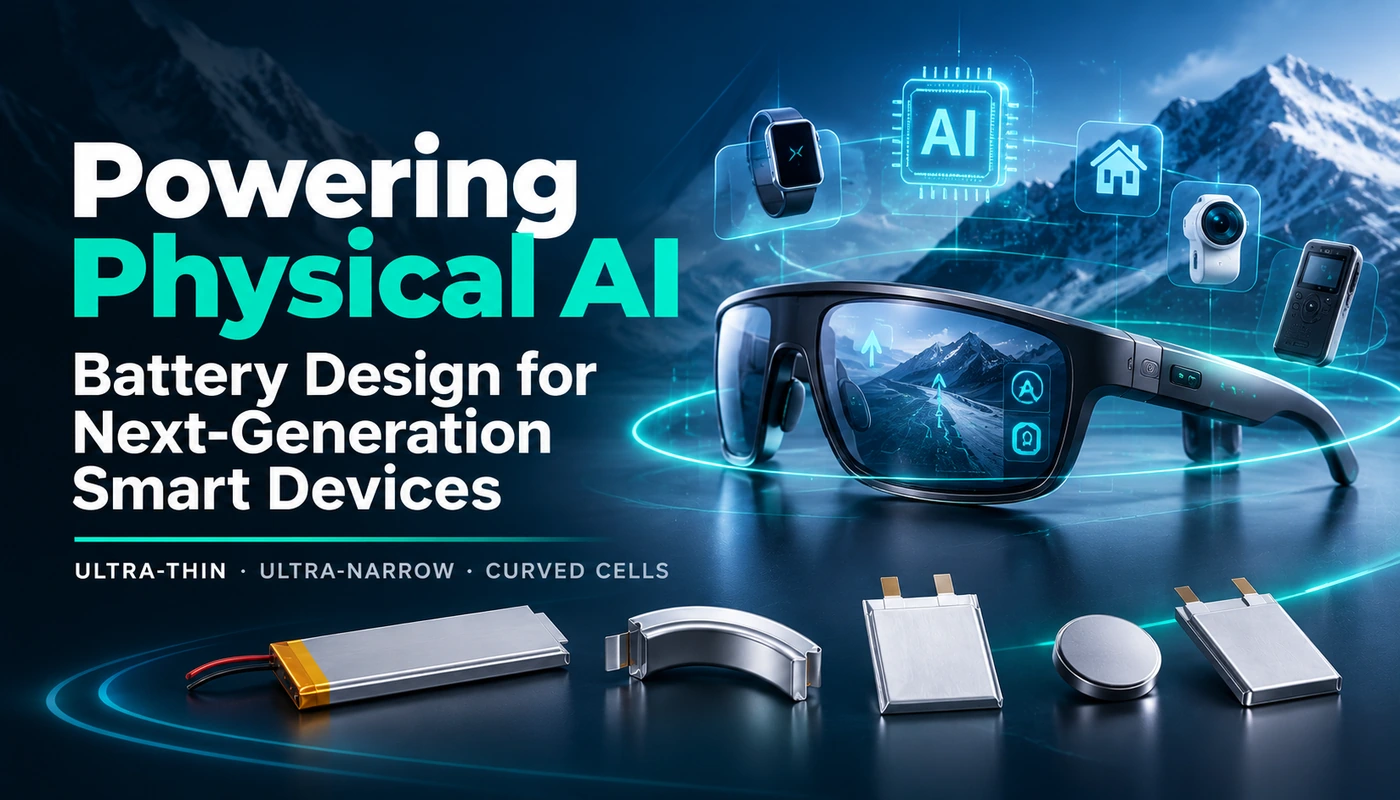
Powering Physical AI: Battery Design for Next-Generation Smart Devices
2026-11-16 -

Smart Earring Batteries: Powering the Next Generation of Health Wearables
2026-11-04 -
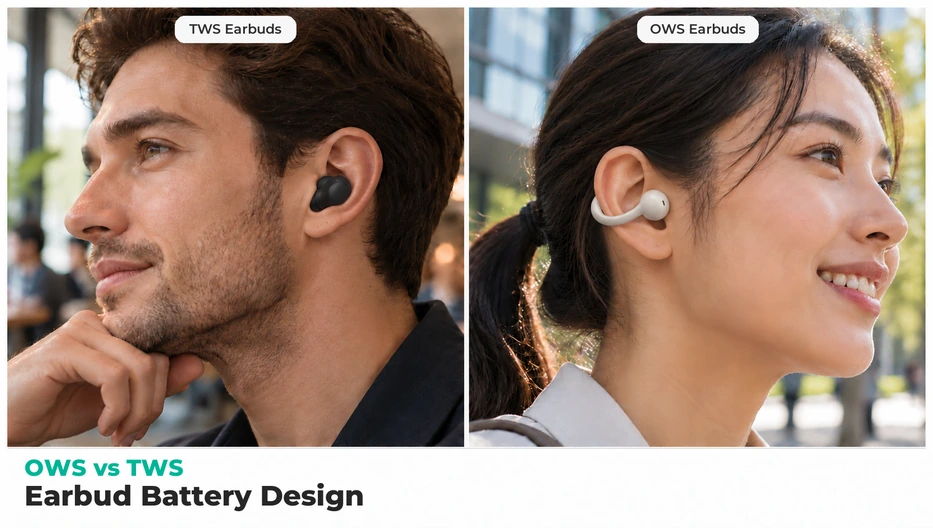
OWS vs TWS Earbud Battery Design: Key Differences in Shape, Power and Runtime
2026-10-29
Related products
-

GRP7820R1 Rechargeable Lithium-Ion Coin Cell Battery
-

GRP9525 Series Rechargeable Lithium-Ion Coin Cell Battery
-

Pouch Ultra Narrow Lipo Battery
-

Pouch Curved Lipo Battery
-

Pouch Ultra Thin Lipo Battery
Comment(0)
Comment(Your email address will not be disclosed. Required fields are marked as * )


